
Alibaba stock (ISIN: US01609W1027) offers investors the opportunity to participate in an e-commerce monopoly – and at affordable prices. The stock can best be understood against the backdrop of global megatrends that are fundamentally changing the economy and consumption. Digitalization and the use of artificial intelligence enable data-driven business models in which platforms gain competitive advantages through networking, analysis, and monetization of data. Alibaba is at the intersection of these trends and is leveraging them to scale its ecosystem of e-commerce, logistics, cloud, and AI in the long term and tap into new business areas
Source: Alibaba stock
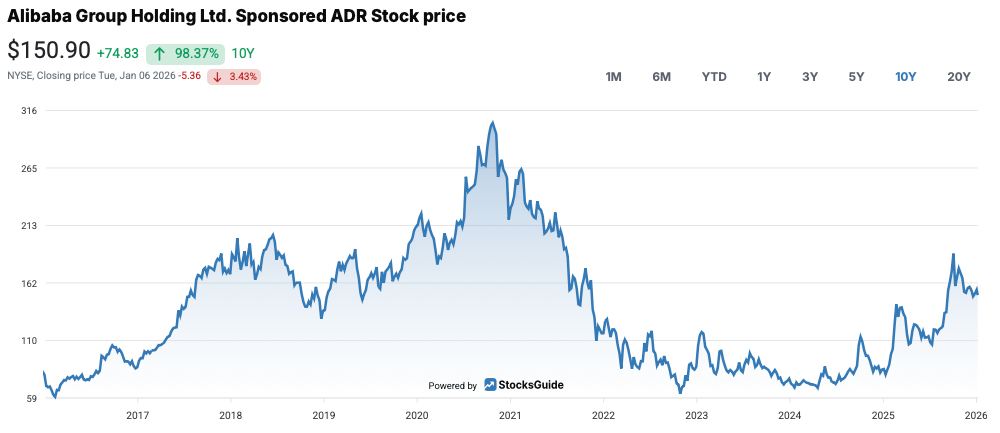
Alibaba stock performed very well until fall 2020, having reached new all-time highs over a long period of time. But then risks came to the fore. These were mainly tighter regulatory measures in China, such as the halted IPO of Ant Group and antitrust investigations. The temporary disappearance of CEO Jack Ma also caused uncertainty. Added to this were geopolitical tensions between the US and China, the coronavirus pandemic, market uncertainty and, most recently, high investments in cloud, AI and quick commerce, which weighed on margins. Growth initially tended towards zero. It only picked up again from 2024, but only in single digits.
However, the high investments could pay off in the medium term. Expected double-digit revenue growth and the prospect of higher margins could put Alibaba in a better position than ever before. The valuation, with a P/E ratio of 20, is affordable. In addition, there are cash reserves and high free cash flows. These are all strong arguments that are also recognized in the Levermann analysis. But is Alibaba stock a buy? The following Alibaba stock analysis highlights opportunities and risks.
Company profile – Market leader in Chinese e-commerce
Alibaba is China's leading online retail group with unbeatable dominance. As a first mover in Chinese e-commerce, Amazon's business model is very similar, although there are differences. Its market share in the Chinese e-commerce market is estimated at 40 to 45 percent.
Source: StocksGuide AI
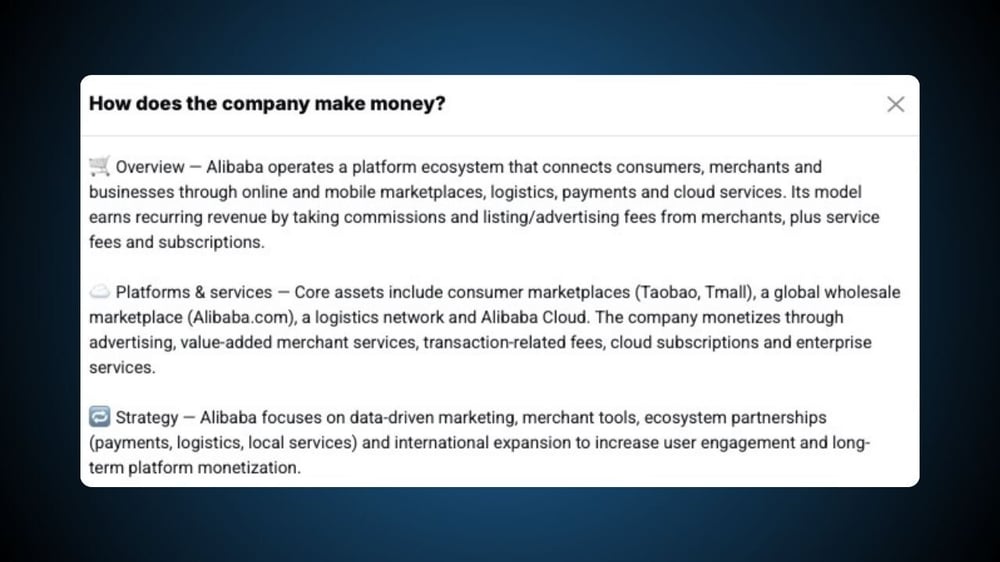
The Alibaba Group's business model is based on a diversified revenue mix. Individual segments contribute to group revenue to varying degrees and each fulfill clearly defined strategic functions within the overall ecosystem. The revenue structure relates to the following strategic business areas:
Alibaba China E-Commerce
-E-Commerce (Customer Management)
-Direct Sales, Logistics and others
-Quick Commerce
-China Commerce Wholesale
Alibaba International Digital Commerce Group
-International Commerce Retail
-International Commerce Wholesale
Cloud Intelligence Group
All Others
Alibaba Group's business segments in detail
Alibaba China E-Commerce
By far the largest share of revenue is generated by the Alibaba China E-Commerce Group, which forms the core of the group. In the third quarter of 2025, its share of revenue was around 54 percent. Growth was recently at 16 percent. The segment is primarily focused on the Chinese domestic market and benefits from high market penetration, strong network effects, and deep integration of commerce, marketing, logistics, and data analytics. Within the China E-Commerce Group, the largest share of segment revenue comes from traditional e-commerce business, with revenue from customer management dominating in particular. These revenues come primarily from advertising-based and data-driven services for retailers and brands. They represent the structurally most important and highest-margin component of Group revenues. The share of revenues from direct sales, logistics-related services, and other trading activities is significantly lower and primarily fulfills a supporting and stabilizing function within the platform ecosystem. Quick commerce accounts for a growing, albeit still relatively small, share of revenue within the China business. Quick commerce is positioned as a complement to traditional e-commerce and is increasingly diversifying the Group's revenue. With revenue growth of 60 percent, quick commerce was the Group's biggest revenue driver in the third quarter of 2025 – which is hardly surprising, given the high level of investment in this area. Despite its high growth, this area lags behind the established marketplace business in terms of share. However, it is gaining strategic importance as it opens up new consumption opportunities and usage frequencies. Chinese wholesale, on the other hand, contributes only a comparatively small share to total revenue, but acts as an important link between producers and smaller retailers and strengthens the vertical integration of the ecosystem.
Alibaba International Digital Commerce Group
With a 14 percent share of revenue, the Alibaba International Digital Commerce Group is the group's third-largest revenue block, but lags significantly behind the China business. The majority of this international revenue comes from cross-border and local retail business, while international wholesale business contributes a smaller but stable share. Overall, the revenue share of this segment reflects the fact that although Alibaba has an international presence, the group's economic focus remains clearly on China, which is often criticized. Other players such as PDD Holdings have performed significantly better in this area with Temu.
Cloud Intelligence Group
The third segment, the Cloud Intelligence Group, already contributes a significant share of consolidated revenue, but still plays a subordinate role compared to the retail business. However, its 16 percent share of revenue is growing structurally faster than that of the retail segments. This underscores the increasing importance of cloud services, artificial intelligence, and data-based infrastructure for Alibaba's business model. In the long term, this segment is less dependent on trading volume and aims for recurring, technology-driven revenues with greater strategic leverage.
All Others
The last major segment, “All Others,” contributes a significant but declining share of consolidated revenue. It comprises heterogeneous business areas such as digital media, local services, and other innovation-driven activities. Revenue share is declining here, reflecting the deliberate strategic realignment toward the more profitable and scalable core areas of e-commerce and cloud.
Market characteristics and opportunities & risks of Alibaba stock
They are characterized by exceptionally high digital penetration, strong network effects, and close integration of commerce, technology, and everyday services. The Chinese e-commerce market in particular is highly mature, intensely competitive, and characterized by strong consumer price sensitivity. This leads to constant pressure to innovate and rapid imitation of successful business models. Large corporations with rigid structures often find it more difficult to compete than small, dynamic start-ups. The platforms compete not only on product range and price, but also on user experience, delivery speed, personalization, and the integration of additional services such as payment processing, financing, and local services.
A key feature of this market is the dominant role of data-driven business models. In these models, access to large user and transaction databases is crucial for competitive advantage. Alibaba benefits here from its size and the long history of its platforms. At the same time, however, the company is under increasing regulatory scrutiny as market power and data use in China are increasingly regulated politically and socially. The market is therefore not only economically but also strongly institutionally influenced. Government intervention can have a significant short-term impact on business models and investment decisions. The fact that the state retains the upper hand here is evident in its consistent approach to Alibaba. For example, the mega IPO of the financial division Ant Financial planned for 2020 was stopped by Chinese regulatory authorities. CEO Jack Ma criticized this and subsequently disappeared from public view for several months. In 2023, the majority stake in Ant Group was finally sold.
Another characteristic feature is the high level of dynamism on the supply and demand side, which is particularly evident in new formats such as social commerce, live streaming, and quick commerce. These developments lower the barriers to market entry for new retailers and platforms, but at the same time increase competitive pressure on established providers such as Alibaba, as user loyalty is less stable than in traditional Western markets. At the same time, value creation is increasingly shifting from pure transactions to attention, content, and community-based interactions.
Source: StocksGuide AI
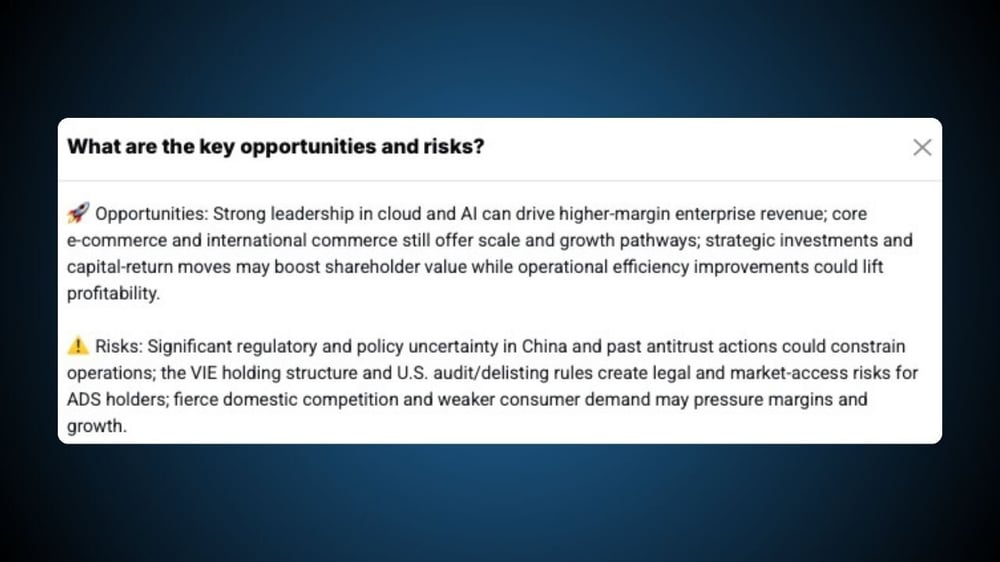
On the upside, Alibaba is benefiting from the continued importance of online retail in the Chinese consumer sector, the digitalization of small and medium-sized enterprises, and the structural shift toward service- and technology-driven revenue models. Long-term growth opportunities are emerging, particularly in the cloud and AI environment, as companies and public institutions are increasingly reliant on scalable digital infrastructures. There are also opportunities in international business, especially in emerging markets with a young, digitally savvy population where Alibaba's platform model is not yet strongly represented.
However, there are also significant risks that could have a lasting impact on the market environment. In particular, intense competition from domestic rivals is leading to margin pressure and rising marketing costs. Market share has been steadily lost in recent years. Economies of scale alone are therefore no longer sufficient to ensure profitability. In addition, regulatory uncertainty in China increases strategic risk, as interventions in pricing, data use, or platform practices can significantly limit the profitability of individual business areas.
Further risks arise from macroeconomic factors such as a slowdown in consumer growth, rising unemployment, or geopolitical tensions. These can particularly affect international business and the cloud division. Technological risks also play a role, as the market is characterized by a rapid innovation cycle and misguided investments in new formats or technologies can quickly lose value.
Alibaba's main competitors
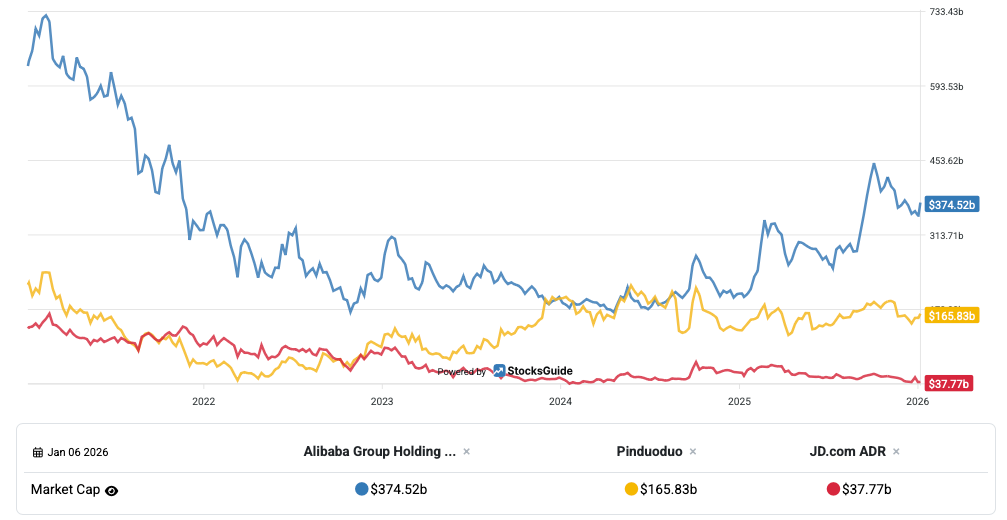
Alibaba's competitive environment is characterized by a high concentration of a few, very capital-strong players. Each of these players has different strategic priorities, thereby intensifying competition on several levels. In its core Chinese market, Alibaba faces direct competition primarily from JD.com, Pinduoduo, and, increasingly, ByteDance. Competition is not limited to online retail, but also extends to logistics, data, content, and technological infrastructure.

Source: StocksGuide AI
JD.com is one of Alibaba's main competitors in Chinese e-commerce. The Beijing-based company stands out thanks to its more integrated business model, which includes its own warehousing and logistics infrastructure. While Alibaba primarily acts as a platform operator, JD.com controls large parts of the physical value chain itself. This leads to greater delivery reliability and quality assurance, but is also more capital-intensive. JD.com positions itself as a trustworthy alternative to Alibaba, particularly in the electronics and higher-value consumer goods sectors, thereby putting pressure on margins and service quality.
Source: Market Cap
Pinduoduo is structurally a different competitor. The company relies on a strongly price-driven, socially integrated shopping model. Through group discounts, gamification, and close integration with social networks, Pinduoduo appeals primarily to price-sensitive consumers and has been able to gain significant market share in a short period of time. With its subsidiary Temu, it has a unique selling point internationally. For Alibaba, however, this competition means an increasing erosion of traditional platform loyalty and increased pressure to be present in the low-price segment without jeopardizing the profitability of its core business.
ByteDance, on the other hand, has established itself as a relevant competitor with platforms such as Douyin, even though the company itself does not originally come from the retail sector and is instead a social platform company. But the combination of algorithmically controlled content, live streaming, and integrated purchasing options creates a retail model that directly converts attention into transactions – and it works. This approach shifts competition from pure search and marketplace logic to content-driven consumption. Alibaba is now forced to expand its own social and content formats more strongly.
In the international arena, however, Alibaba competes primarily with Amazon, especially in cross-border trade and the cloud business. It is striking that Amazon has a stronger presence in developed Western markets, where it combines marketplace, proprietary trading, logistics, and cloud services in a highly integrated model. This makes Amazon a benchmark for Alibaba in terms of scale, technological performance, and profitability, both in international e-commerce and with AWS in the cloud segment.

Source: Market Cap Peer International
At the regional level, additional competitors are emerging through local platforms such as Shopee in Southeast Asia and Mercadolibre in Latin America. These players know their markets very well and can sometimes respond more quickly to local consumer habits than a global provider such as Alibaba. However, this also limits Alibaba's ability to transfer its Chinese platform model one-to-one to other regions. Local adaptations will be necessary in order to take off internationally.
In the cloud sector, Alibaba Cloud is in direct competition with global providers such as Amazon Web Services, Microsoft Azure (Microsoft), and Google Cloud (Alphabet), as well as with national Chinese competitors. Competition here is strongly driven by technology and price. In order to remain competitive in the long term, continuous high investments in infrastructure, security, and, of course, research are necessary.
Alibaba's latest quarterly figures from September 2025
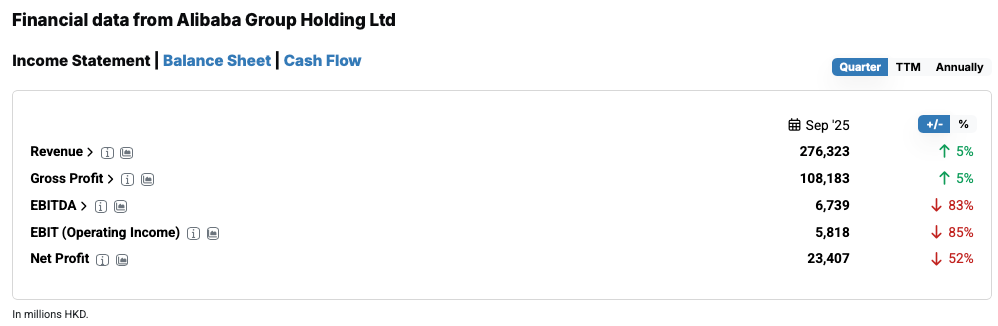
The latest quarterly figures show a clear strategic shift in focus from short-term profit optimization to long-term competitiveness in the areas of artificial intelligence, cloud infrastructure, and consumer-oriented platforms. The group is deliberately in an investment phase, which is reflected in solid revenue growth accompanied by a significant decline in profitability.
Source: Financial Data
While revenue at the group level grew moderately by 5 percent, operating profit and net income came under significant pressure, falling by 85 percent and 52 percent, respectively. The decline in earnings is less attributable to structural weakness in the core business and more to targeted reinvestments in quick commerce, the user experience, and, in particular, AI and cloud technologies. Alibaba openly communicates that short-term earnings volatility is accepted in favor of long-term strategic value.
Operationally, two business areas stand out in particular. On the one hand, the cloud business recorded very strong momentum (34 percent revenue growth), driven by continued high demand for AI-related products. The share of AI revenue in cloud revenue is growing, especially among external corporate customers. However, it still accounted for only around 16 percent of total revenue. This once again underscores Alibaba Cloud's technological positioning as a key growth platform. Strong demand confirms the relevance of massive investments in data centers, AI infrastructure, and proprietary base models. On the other hand, the consumer business developed robustly despite the competitive market environment. The classic customer management business remained a stable source of income with a 32 percent share of revenue and ten percent growth, while quick commerce gained significantly in importance (60 percent revenue growth; 9.2 percent share of revenue). This business segment reached critical mass, became more uniform, and contributed significantly to the increase in user activity on the Taobao platform. It is particularly important to note that growth is increasingly accompanied by improved profitability, which points to more sustainable scaling.
Source: Financial Data
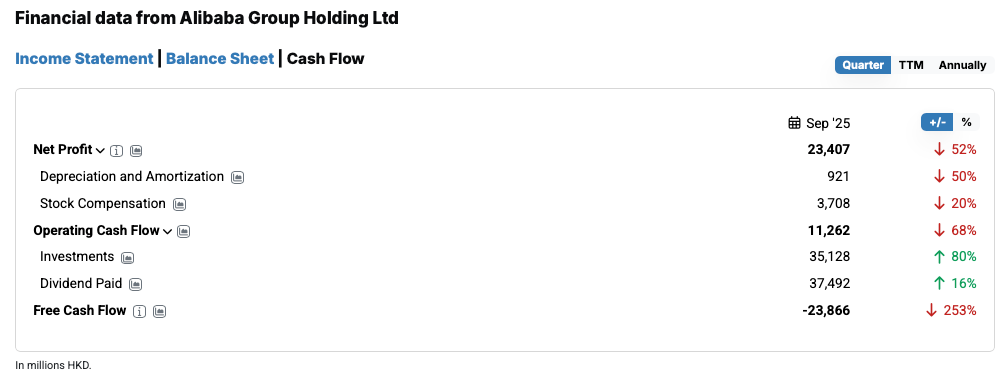
The figures on the cash flow side show a significant burden from high investments, which rose by 80 percent. Operating cash flow declined by 68 percent and free cash flow is negative. This amounted to a deficit of more than HK$23 billion, which is primarily attributable to the expansion of the cloud and AI infrastructure as well as investments in quick commerce. At the same time, Alibaba continues to have a very strong liquidity position. This allows the group to get through the current investment phase without immediate financing pressure.
Strategically, the quarter can be interpreted as a turning point at which Alibaba is further sharpening its role as a technology-driven platform company. The group is prioritizing scaling, technological leadership, and ecosystem strengthening over short-term margins. The key figures therefore signal less an operational weakness than a conscious transition to a capital-intensive development phase, the success of which is only likely to be fully reflected in earnings in the coming years. That, in turn, is by no means guaranteed. Currently, only the China E-Commerce Group, Cloud Intelligence Group, and International Digital Commerce Group segments are profitable. They subsidize all other areas.
Alibaba stock forecast for 2025
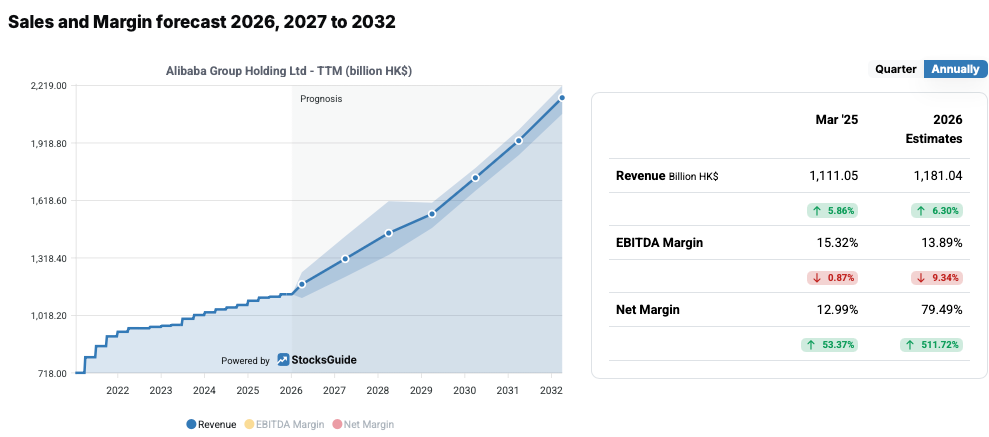
Although the published annual report does not contain any official, binding sales or earnings forecasts from Alibaba for the full year 2025, there are estimates from analysts and market projections that paint a picture of the expected development. Many analysts remain confident about growth in the coming years. This is driven in particular by the cloud and AI businesses and the stable development of the core e-commerce business.
Source: Sales and Margin forecast
For Alibaba, this implies stable long-term growth that will accelerate significantly from the middle of the forecast period onwards, exceeding the moderate pace of expansion in the short term. Revenue of around HK$1.1 trillion is expected for 2025. This corresponds to comparatively modest growth of just under six percent, which is in line with the current phase of high investment and subdued profitability. However, this is likely to be a transitional year in which revenue growth is present but does not yet fully benefit from strategic investments in cloud, AI, and new consumption formats.
Source: Revenue estimates
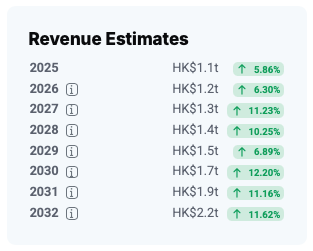
Revenue growth is then expected to accelerate significantly between 2026 and 2028, with rates ranging from just over 6 percent to more than 11 percent. The basic assumption here is that the infrastructure that has been built up will increasingly be monetized. The particularly strong growth from 2027 onwards further indicates that investments in the cloud and AI sectors are increasingly translating into scalable revenues, while the consumer business is regaining momentum. For the period from 2029 onwards, the forecast assumes a phase of relative maturity with lower growth rates in the meantime, followed by a renewed acceleration from 2030 onwards. Alibaba could therefore return to double-digit growth rates in the long term. However, this assumes that Alibaba Cloud establishes itself as the leading AI infrastructure platform and that international trading activities make a more substantial contribution to group revenue than they do today.
Key figures for Alibaba stock from the Levermann analysis
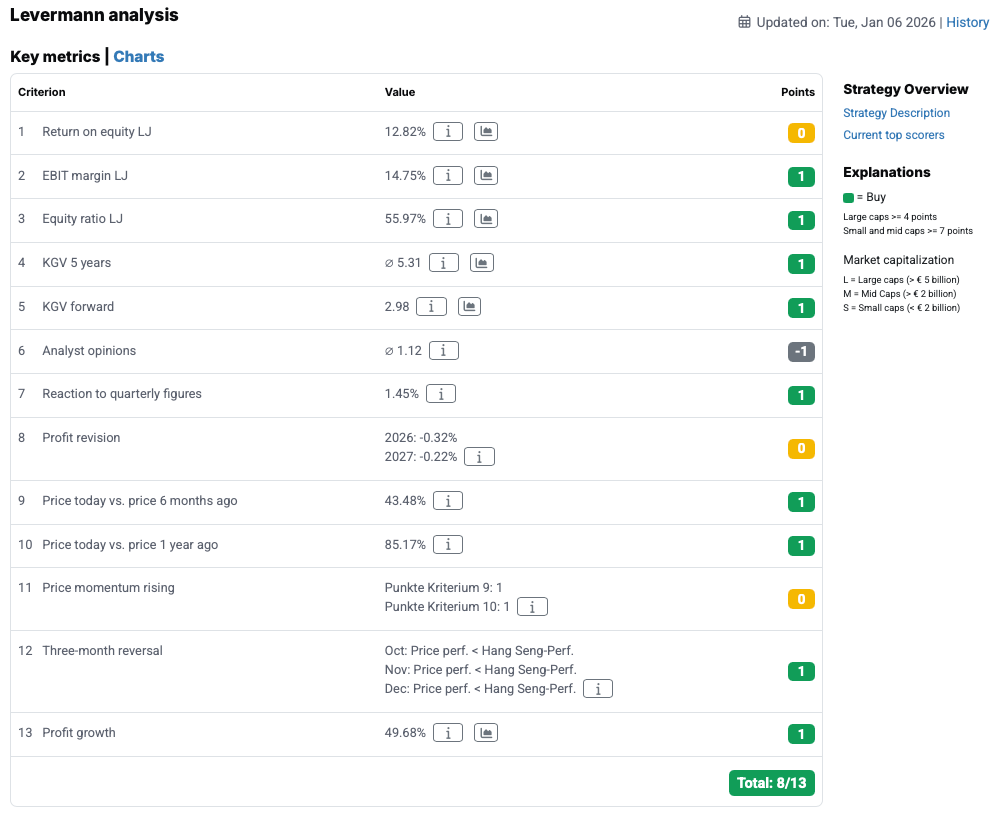
The Levermann analysis gives Alibaba a mixed but thoroughly positive overall rating. Specifically, the stock is in the attractive range with 8 out of a possible 13 points, thus providing a clear buy signal.
Source: Levermann analysis
Above all, the key figures at the fundamental level show a solid basis. The return on equity of 12.8 percent is at a respectable but not outstanding level and is rated as neutral in Levermann logic. The EBIT margin of just over 15 percent, on the other hand, indicates a fundamentally robust operating earnings base, which signals a certain level of profitability despite the high level of investment. The high equity ratio of 56 percent is particularly positive. It underscores the strong balance sheet structure and gives Alibaba financial leeway for investments, restructuring, and cyclical fluctuations. The valuation ratios also appear positive. In the logic of Levermann analysis, this clearly indicates undervaluation, although the market apparently continues to price in considerable risks or uncertainties, particularly with regard to regulation, competition, and earnings volatility. But more on that later in the valuation section.
Analyst opinions on the market assessment side, on the other hand, show a rather skeptical attitude, which is reflected negatively in the score. This caution is reinforced by the negative earnings revisions for 2026 and 2027. These also indicate that market participants expect further margin pressure in the short term. This is due to ongoing investments in AI, cloud, and quick commerce, which could weigh on earnings for several years to come.
In contrast, several momentum-based indicators clearly favor the stock. The share price performance over the last six months (+36 percent) and the last twelve months (+85 percent) is very strong and signals that the market is increasingly rewarding the strategic realignment. The positive reaction to the latest quarterly figures also shows that even weaker earnings are accepted by investors as long as the strategic vision remains intact.
Source: Profit growth
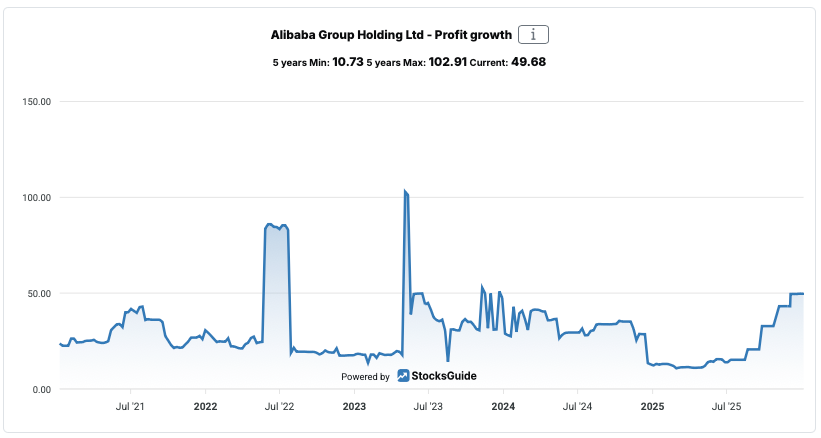
The reported profit growth of almost 50 percent is particularly positive and is considered a clear plus point in the Levermann analysis.
The key figures show that Alibaba is still fundamentally attractive and has strong structural conditions, but the market continues to weigh up long-term potential against short-term uncertainties – not without reason, as the following chapter will show.
Valuation of Alibaba stock
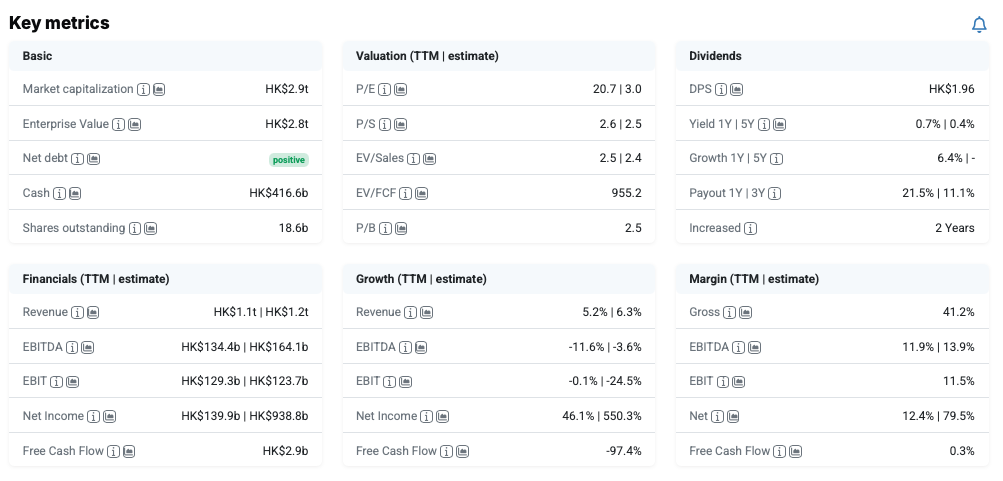
At first glance, Alibaba's valuation appears fair with a P/E ratio of 20. This is reflected in several key figures. Such a low P/E ratio is unusual for tech monopolists in an international comparison and is primarily indicative of high investor skepticism. But in reality, high investments are weighing on the stock. For example, US$53 billion is being invested in AI and cloud infrastructure. Large sums are also flowing into quick commerce and the company's own AI models in the Qwen series. These investments are weighing on the company in the short term, but should lead to stronger revenue growth in the long term. The margin could therefore rise back to a solid level in the medium to long term, and the P/E ratio could fall to an attractive level.
Source: key metrics
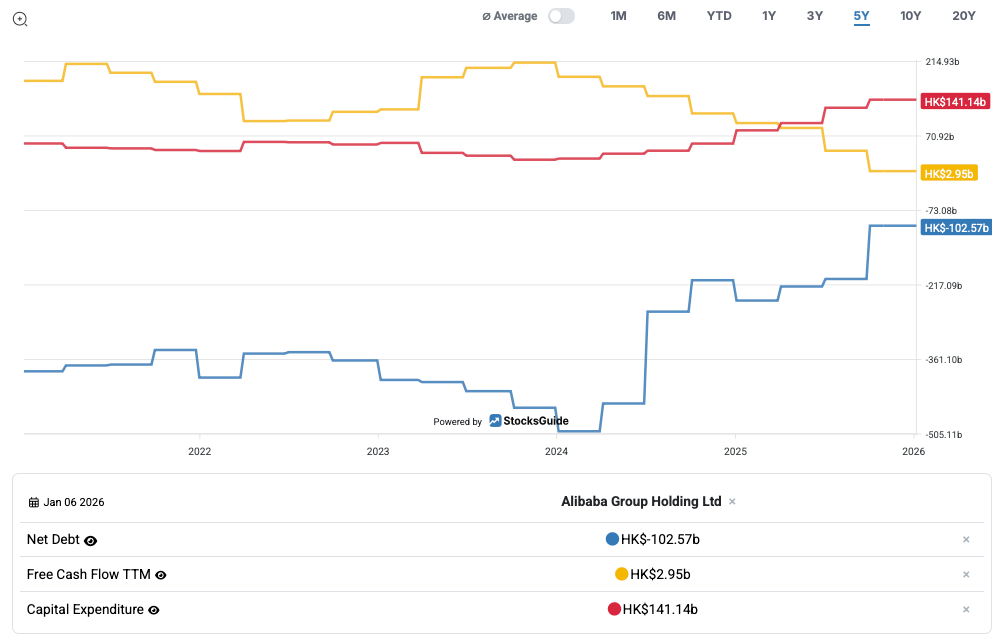
There is also a significant discrepancy between the P/E ratio and EV/FCF. At first glance, the figure of 891 appears very high, but it must be interpreted in the context of massive investments in cloud and AI infrastructure. Alibaba is currently investing heavily in technology-driven growth areas, which is putting a significant strain on free cash flow. However, these investments are expected to significantly increase the platform's profitability and scalability in the long term.
Source: StocksGuide Charts
With an EV/sales ratio of 2.4, the large tech group is only moderately valued. In view of potential sales increases, this shows above all that margins are not yet fully reflected due to the strategic investment phase. And, of course, historically speaking, the stock has been cheaper in the past, especially in the recent past. Measured against the IPO price, the valuation is currently at a low. However, growth has also slowed noticeably since then. In addition, the geopolitical risk looks completely different today than it did ten years ago.
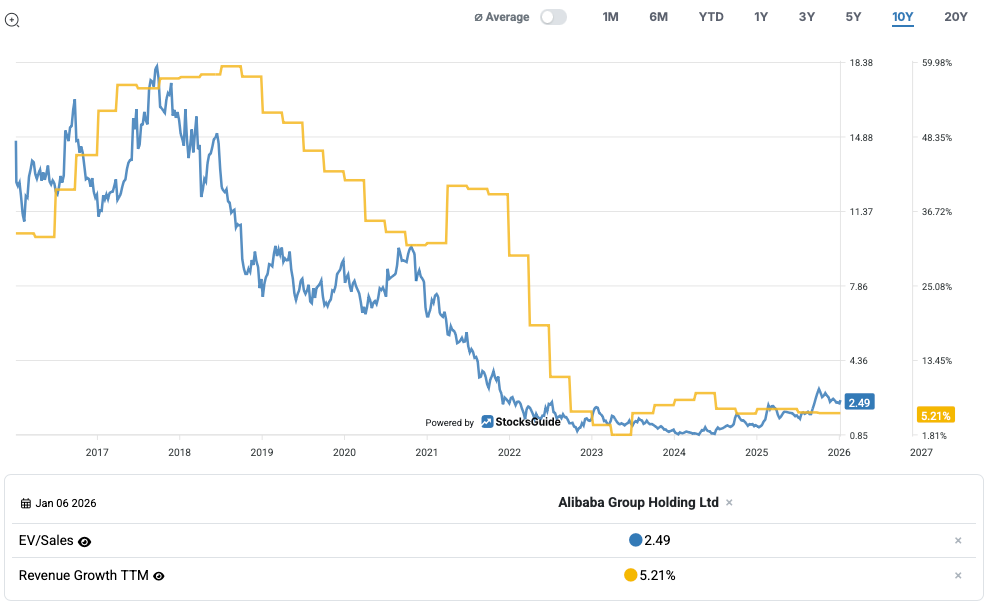
Source: StocksGuide Charts
The stock is therefore cheap because the market is pricing in several uncertainties. These include high investments in cloud, AI, and quick commerce, which are weighing on profitability in the short term. Added to this are regulatory risks in China, geopolitical tensions, and, of course, the competitive situation in e-commerce and cloud computing. At the same time, the valuation reflects the fact that many investors are not yet fully pricing in the medium-term growth opportunities and potential margin increases from the technological investments. This combination of short-term risk aversion and long-term growth potential means that the stock appears fundamentally undervalued and has an attractive P/E ratio for a tech monopolist.
Conclusion on Alibaba stock
Despite short-term price declines, Alibaba has remained on a long-term growth path since 2020. The Chinese tech company is benefiting from strong megatrends such as digitalization, AI, and cloud technology, as well as the structurally growing consumer market in China. In the short term, however, regulatory measures, high investments, and geopolitical uncertainties are weighing on the stock. In the long term, investments in particular are opening up opportunities for sustainable revenue and profit growth. With a moderate P/E ratio of 20, the stock currently appears fundamentally attractive, especially since the market is not fully pricing in the medium-term growth prospects and the strategic development of technology and platform competencies. On the other hand, political risks may be priced in even more. These risks are high for Alibaba, especially in the Chinese market, and have even increased significantly in recent years. A key factor is the intensification of regulation by the Chinese government, which closely monitors the technology sector. This includes antitrust investigations, data control requirements, restrictions on financial technologies, and requirements for platform businesses. These restrict operational freedom, delay investment plans, and cause additional costs. In addition, there are geopolitical tensions, particularly between China and the US. These can affect international trade, access to global markets, or the valuation of Chinese stocks on Western stock exchanges. We have observed similar developments with Russian stocks. Export restrictions, sanctions, and political conflicts are also likely to hamper Alibaba's international expansion and technology partnerships.
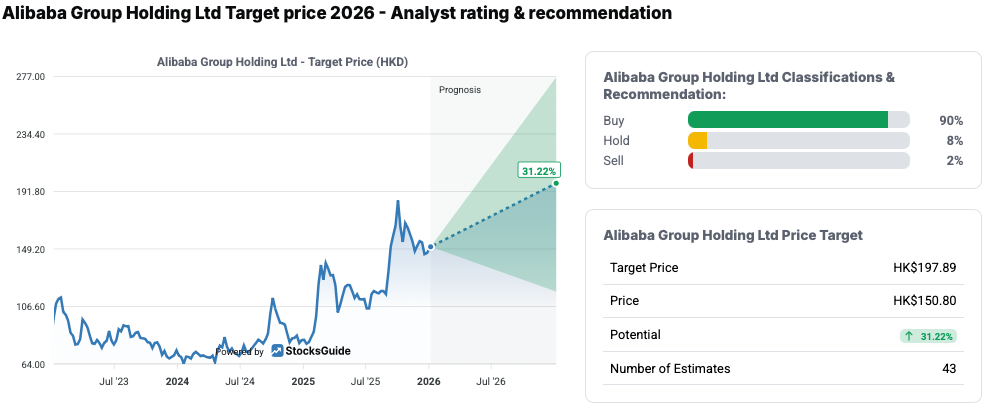
Source: Alibaba Target price
Nevertheless, 90 percent of analysts recommend buying the stock. Only two percent advise selling and eight percent advise holding. Analysts see significant upside potential for Alibaba. The average price target is just under HK$200, while the stock is currently trading at HK$149.29. The price potential over one year is around 33 percent. With 43 analyst estimates, there is also a relatively broad consensus, which increases the significance of the price target. Investors looking for further price cushion can set a price alert at HK$125 for the Hong Kong listing of the stock. Converted into euros, that is less than €14.
The author and/or persons or companies associated with StocksGuide own or may own shares of Alibaba. This article represents an expression of opinion and does not constitute investment advice. Please note the legal information.