Mercedes-Benz (ISIN: DE0007100000) is one of the world's best-known and most traditional automobile manufacturers. Like no other, the Swabian company stands for premium quality, technology, and brand strength. At the same time, however, the group is also undergoing profound change: electrification, digitalization, increasing competitive pressure, and fluctuating global demand are fundamentally changing the environment. This development is also reflected in the directionless fluctuation of the share price, which has been moving sideways for over 20 years.
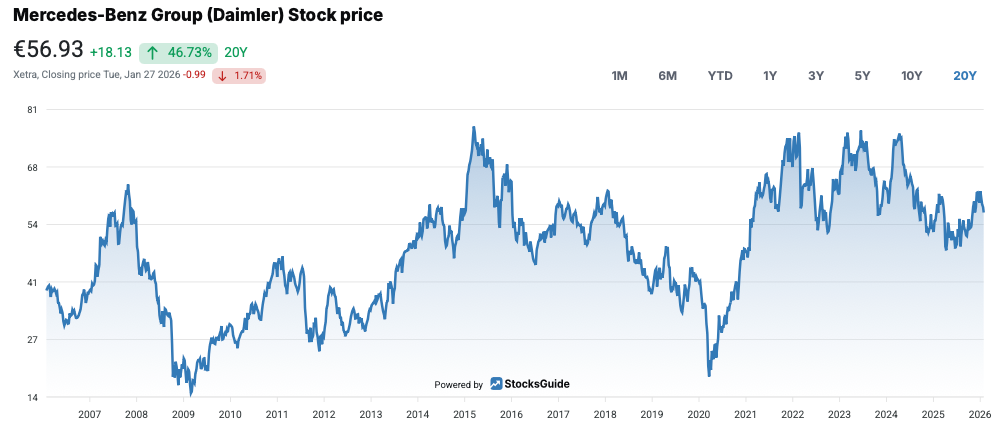
Source: Stock Price
Over a period of 20 years, investors have nevertheless seen a 65 percent increase in share price. Over ten years, it is still at 8 percent. Without the high annual dividends, the investment would be unattractive. But the annual dividends of around 5 percent change things considerably. Compared to the competition – above all Tesla – the stock is still not a top investment. However, as we know, the stock market trades in the future. And with a little luck, the future may not be quite as bleak as the market predicts. Mercedes-Benz is seen as the loser in e-mobility, facing significant market share losses and sunk investments worth billions. Against this backdrop, investors are wondering how attractive Mercedes-Benz actually is at present. The following stock analysis takes a holistic view of the Mercedes-Benz Group – from its business model and strategy to its competition and opportunity/risk profile, through to the Levermann analysis and the current valuation of the stock. It generates a clear buy signal in two strategies.
Company profile – leading premium car manufacturer
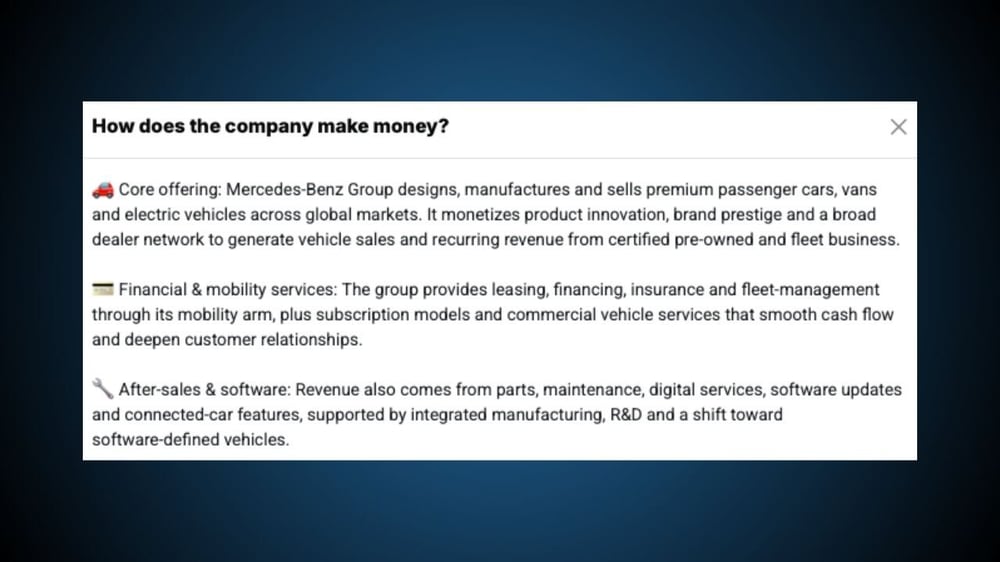
The Mercedes-Benz Group is an international premium automotive group whose business model is geared towards combining high-quality vehicles with complementary financial and mobility services. And the Stuttgart-based company is extremely good at this. After BMW, the Swabians are the world's second-largest premium car manufacturer. However, the business is not limited to automobiles. It also offers commercial vehicles and mobility solutions. The aim is to create value throughout the entire life cycle of a vehicle – from development and sales to use and financing.
The Mercedes-Benz Group therefore classifies its business into three segments:
- Mercedes-Benz Cars
- Mercedes-Benz Vans and
- Mercedes-Benz Mobility
Source: StocksGuide AI
Mercedes-Benz Cars
With a share of around 71 percent of revenue, the Mercedes-Benz Cars segment forms the core of the Group. It encompasses the development, production, and global sales of premium and luxury passenger cars of the Mercedes-Benz brand. This includes both volume models and particularly high-margin vehicles of the Mercedes-AMG and Mercedes-Maybach brands. The economic success of this segment is based on a strong brand, high technical quality, and a clear focus on the premium and luxury segment. In addition, electric vehicles, software functions, and digital services are playing an increasingly important role. They open up new sources of revenue and are intended to ensure competitiveness in the long term.
Mercedes-Benz Vans
In the Mercedes-Benz Vans segment, the Swabian company focuses on light commercial vehicles for commercial and private customers. This segment accounts for around 16 percent of sales. The vehicles in this division are mainly used by companies, craft businesses, and logistics services – but also by private customers who value quality, reliability, and flexibility. The aim here is to offer tailor-made transport solutions and build long-term customer relationships. A key component here is also the electrification of the van fleet in order to meet the increasing demands for sustainability and efficiency. The vehicle business is complemented by digital solutions, such as fleet management and connected services.
Mercedes-Benz Mobility
The Mercedes-Benz Mobility segment, on the other hand, expands the traditional vehicle business to include financial and mobility services. With a share of sales of around 13 percent, it is also the smallest of the three segments. Here, the Group offers leasing and financing models, insurance, and flexible forms of use such as vehicle subscriptions, among other things. It is interesting to note that this segment generates stable, recurring income and strengthens customer loyalty. Customers are viewed holistically and are supported not only when purchasing a car, but also during its use. At the same time, the segment supports sales of vehicles from the Cars and Vans segments by providing attractive financing offers.
Source: StocksGuide AI
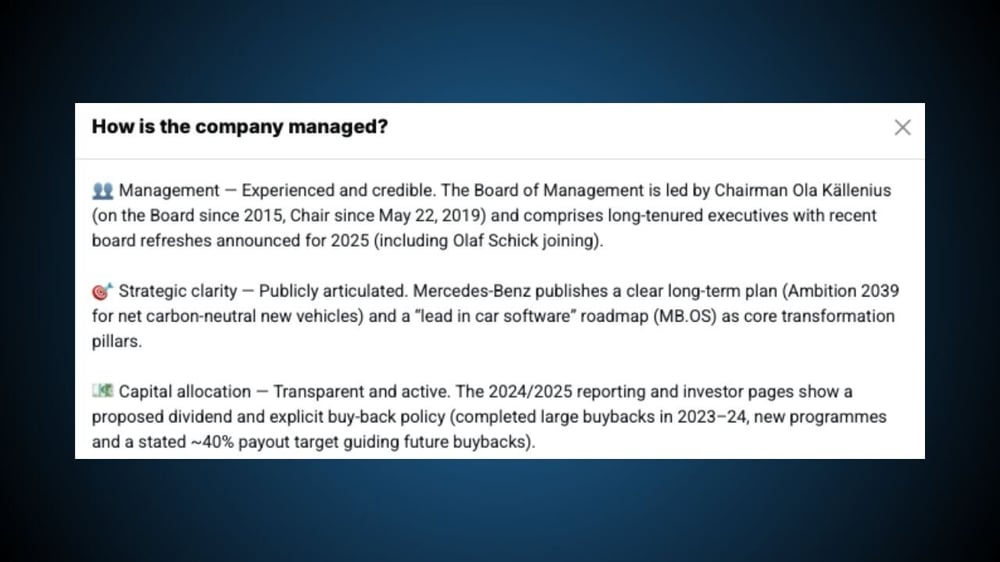
The Mercedes-Benz Group's strategy is clearly focused on the premium and luxury segments. Until recently, its stated goal was to sell fewer vehicles but be more profitable and clearly differentiate itself from volume manufacturers. The aim was to orientate the company more towards Ferrari than Volkswagen. The focus is on the Mercedes-Benz brand, which stands for quality, technology, and exclusivity. At the same time, the product portfolio was to be geared more towards customers who are willing to pay higher prices for premium quality and individual equipment. However, high volumes from small cars such as the A-Class can also be attractive – especially if this means that the fleet's emission values can be kept low. The luxury strategy of “margin instead of mass” announced in 2022 was therefore quickly abandoned at the end of 2025 due to market realities. Declining sales figures and fierce competition created strong headwinds.
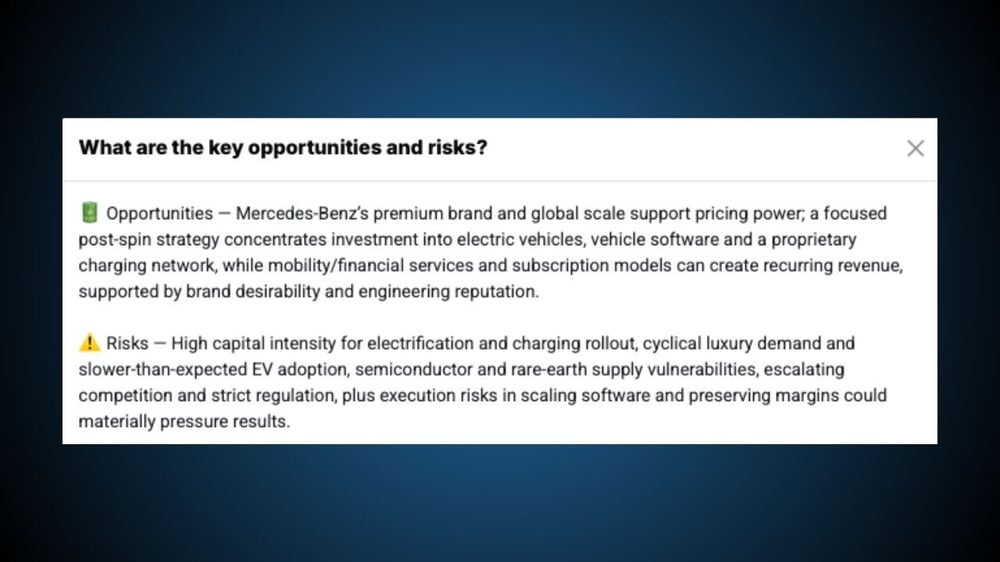
However, the strategy of electrifying the product range, which was part of the luxury strategy, remains in place. In order to remain competitive in the long term and meet regulatory requirements, Mercedes-Benz has been investing heavily in electric vehicles and corresponding platforms for years. Electric mobility is not seen as a mere technological change, but as part of the premium claim, with a focus on range, design, comfort, and digital functions. Digitalization is an important strategic pillar in this context. It is intended to improve the customer experience and promote brand loyalty. To this end, the company is developing its own software platforms, connected vehicle systems, and additional digital functions, some of which are subject to a fee. The Swabian automaker is also surprisingly far ahead when it comes to self-driving cars. In 2021, it was the first to receive international certification for an SAE Level 3 system. This initially enabled highly automated driving at speeds of up to 60 km/h. In 2024, an update followed with approval for speeds of 95 km/h. However, if the market is to be believed, the big tech companies – led by Alphabet (Waymo) and Tesla – are uncatchably far ahead. Nevertheless, Mercedes could also have a good chance of generating recurring revenue streams beyond one-time vehicle sales through more and more new tech features. This ensures greater predictability and a potentially higher stock valuation. The strategy opens up numerous opportunities for the company, but also involves clear risks.
Source: StocksGuide AI
One major opportunity, for example, lies in a consistent focus on the premium and luxury segment. Customers in this segment are generally less price-sensitive, which tends to enable higher margins. Particularly exclusive models and customised features offer additional earnings potential. Electrification also offers opportunities. Thanks to its extensive investments in electric vehicles, Mercedes-Benz could theoretically position itself as the leading premium provider in the e-mobility market. If the company then succeeds in combining electric mobility with luxury, long range, and innovative technology, it could even gain a competitive advantage. Last but not least, increasing digitalization is also opening up new opportunities. Connected vehicles, software updates, autopilots, and paid digital add-ons should increase the share of recurring revenue in total sales in the long term. In combination with financing, leasing, and mobility offers from Mercedes-Benz Mobility, this creates a more stable business model that is less dependent on pure vehicle sales.
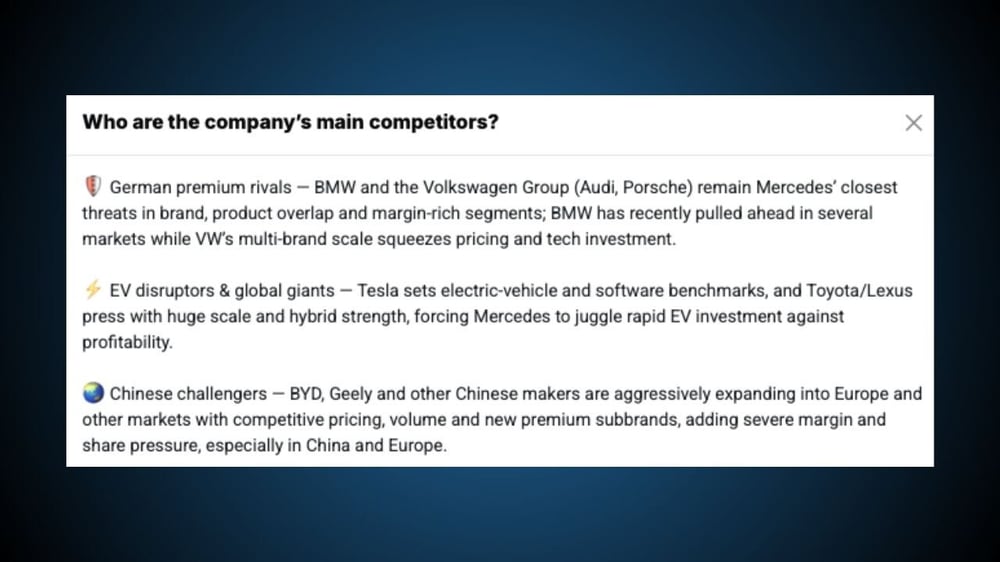
However, there are also risks. The strong focus on the premium and luxury segment makes the group more vulnerable to economic downturns. In times of crisis, even wealthy customers may postpone spending on expensive vehicles, which has a negative impact on sales and profits. In addition, Mercedes-Benz deliberately avoids large volumes, which reduces the scope for cost distribution. Economies of scale are a key argument for investors in fixed-cost-driven business models such as those of car manufacturers. Further risks lie in the high investments in electromobility and software. The development of new platforms, battery technologies, and digital systems is not only very capital-intensive, it only pays off if demand increases as expected. Technological failures or slower market development could therefore quickly affect profitability. Added to this is increasing competition. In addition to the traditional premium manufacturers, new suppliers – especially from China – are entering the market with innovative and often more attractively priced electric vehicles. Technology companies are also setting new standards in software and user experience, which is increasing the pressure to innovate.
Source: StocksGuide AI
Competition in the Mercedes-Benz Group has long been intense and international. Its most important traditional competitors include BMW and Audi. They pursue similar strategies with a strong focus on premium vehicles, electrification, and digitalization. Competition is particularly fierce in the mid-range and luxury segments, as well as in electric vehicles and technological innovations such as driver assistance systems and connected services. Differences arise primarily from brand image, design, driving experience, and software solutions. In the luxury segment, Mercedes-Benz also competes with manufacturers such as Porsche, Lexus, Bentley, and Rolls-Royce. Here, the focus is not on unit sales, but on exclusivity, quality, and high margins. In this environment, Mercedes-Benz is attempting to position itself with Mercedes-Maybach and particularly high-quality equipment variants.
Source: Revenue
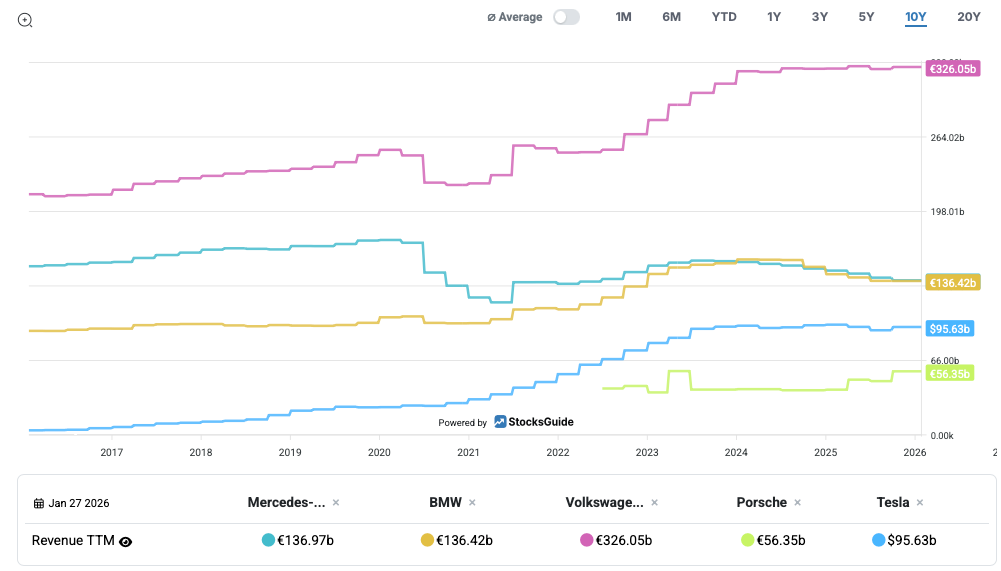
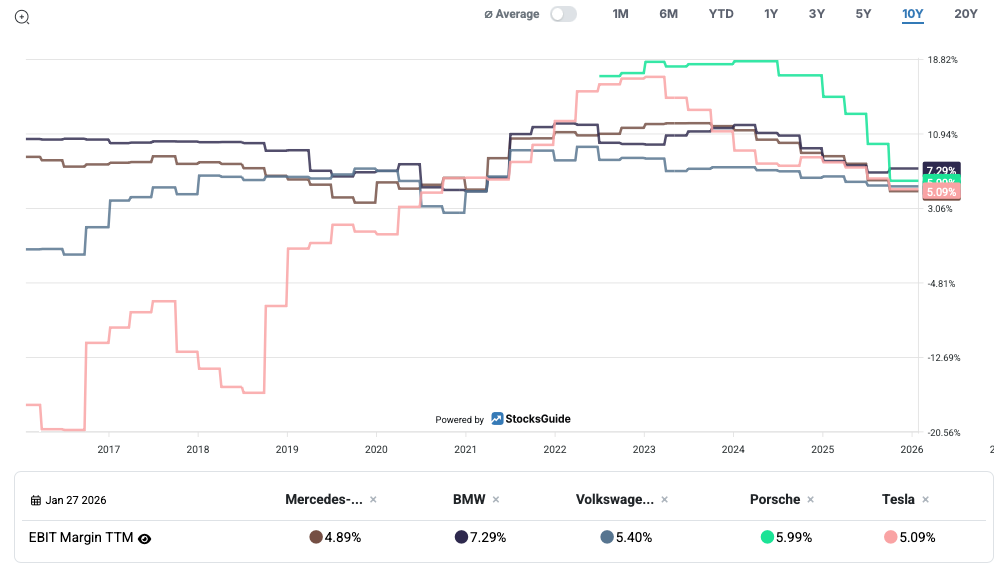
A peer comparison clearly shows that BMW and Mercedes-Benz are neck and neck in terms of sales. However, Volkswagen is in a league of its own due to its focus on volume. Tesla has also failed to match the sales figures of the established manufacturers to date and has recently stagnated. However, the Texans have the most modern factories with correspondingly high efficiency. In terms of earnings, however, there is little difference between the major manufacturers in this peer comparison.
Source: EBIT-Margin
Looking at the ratings, Tesla is in a league of its own. This is because the company is far outstripping its competitors in terms of growth. In addition, it is also seen more as a technology company with potential in the field of autonomous driving and robotics.
Pure electric car manufacturers such as Tesla are now considered to be the main competitors anyway. This is mainly because these companies focused on electric mobility very early on and now have strong expertise in the areas of software, battery efficiency, and charging infrastructure. This is precisely what is putting established premium manufacturers under increasing pressure. In recent years, however, competition among electric car manufacturers has also intensified significantly due to Chinese manufacturers such as BYD, NIO, and Geely. Thanks to government subsidies, low production costs, and favorable exchange rates, they are increasingly pushing into the European market, combining modern electrical engineering with aggressive pricing. In the long term, they represent serious competition—even in the premium segment.
In the van segment, on the other hand, Mercedes-Benz competes primarily with manufacturers such as Volkswagen, Ford, Stellantis, and Renault. Competition here is more cost- and efficiency-driven, with Mercedes-Benz seeking to differentiate itself through quality, reliability, and premium services. Rivian Automotive could also be mentioned in the field of e-mobility. The company builds technologically advanced logistics vehicles for Amazon. In addition to Amazon, the German Volkswagen Group is also a shareholder.
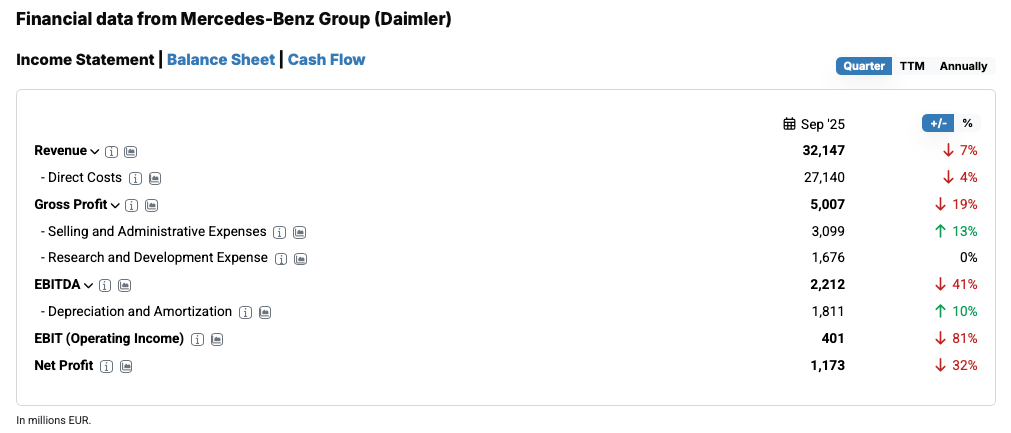
The latest Mercedes-Benz quarterly figures from September 2025
The results for the third quarter show that Mercedes-Benz continues to hold its own in a challenging market environment, while remaining true to its strategic orientation. Operating profit was below the previous year's level. This is primarily due to lower sales volumes, the impact of tariffs and exchange rates, and targeted special expenses for efficiency and restructuring measures. However, these effects are less a reflection of operational weakness than part of a planned restructuring of the Group. Specifically, revenue fell by seven percent, gross profit by 19 percent, and net profit by a good third.
Source: Financial data
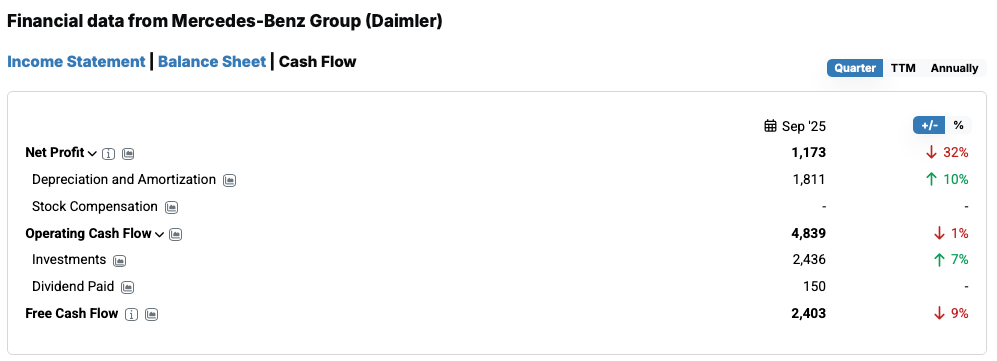
Despite these challenges, margins across all business units developed as expected. At the same time, the financial position remained robust. The Group generated solid free cash flow of around €2.4 billion and further increased its net liquidity. Against this backdrop, the planned share buyback underscores management's confidence in the company's financial stability and long-term earnings power.
Source: Financial data
The premium strategy once again proved its worth in the passenger car business. While the market environment remained challenging, particularly in China and the USA, sales in Europe and several growth regions developed very positively. Strong demand for high-priced top-end vehicles in particular supported profitability. At the same time, momentum in battery electric vehicles increased. New models such as the electric CLA and the new GLC are making the technological change visible. The van business also confirmed its role as a stable source of earnings. Despite investments in new architectures and a weaker sales environment, double-digit returns continued to be achieved. The rapidly growing share of electric vans shows that the electrification strategy is also taking effect in the commercial vehicle sector. Mercedes-Benz Mobility also performed solidly, benefiting from efficiency measures and an improved interest margin, although a cautious approach to credit risks remains necessary.
Mercedes-Benz Forecast for 2025
The outlook for Mercedes-Benz remains highly uncertain. Geopolitical tensions, trade policy measures in the form of tariffs, and weak consumer sentiment are weighing on the global economy and automotive markets. Overall, only moderate global economic growth is expected. The Group therefore anticipates weak demand in automotive markets worldwide. In Europe and the US, the market is likely to remain at the previous year's level, while the Chinese market could grow slightly but is characterized by intense price competition in the premium segment. The market environment for vans also remains challenging overall. Against this backdrop, Mercedes-Benz expects a significant decline in revenue for the full year and lower sales figures in the Cars and Vans segments. Higher tariffs and weaker price enforcement are putting additional pressure on margins. At the same time, the Group continues to focus on efficiency measures, cost discipline, and its product and technology offensive in order to secure profitability despite the difficult environment.
This picture was confirmed by the sales figures for the full year 2025 delivered on January 12, 2026. Mercedes-Benz sold around 1.8 million passenger cars in 2025, representing a decline of 9 percent compared to the previous year. While sales figures in China and the US were impacted by tariffs, intense competition, and deliberate inventory management, sales in Europe developed solidly. Sales grew particularly strongly in South America, Turkey, and the Gulf States. The premium strategy continued to pay off. The share of top-end vehicles was around 15 percent, but only 268,000 vehicles in this category were sold, and here too there was a decline in sales – albeit only 5 percent. On a positive note, Mercedes-AMG achieved one of its best sales results ever, the G-Class reached a record level, and Mercedes-Maybach further expanded its strong position within the S-Class.
Electrification also continued to gain momentum. A record share of electrified vehicles was achieved in Europe. New models such as the electric CLA and the new GLC ensured a high order intake well into 2026. And although sales in the fourth quarter of 2025 were up 3 percent and thus in positive territory, sales for the year as a whole remain down 9 percent. Car sales in the rest of the world performed best, with growth of 17 percent. However, their share is manageable at 98,700 units.
Source: Sales and Margin forecast
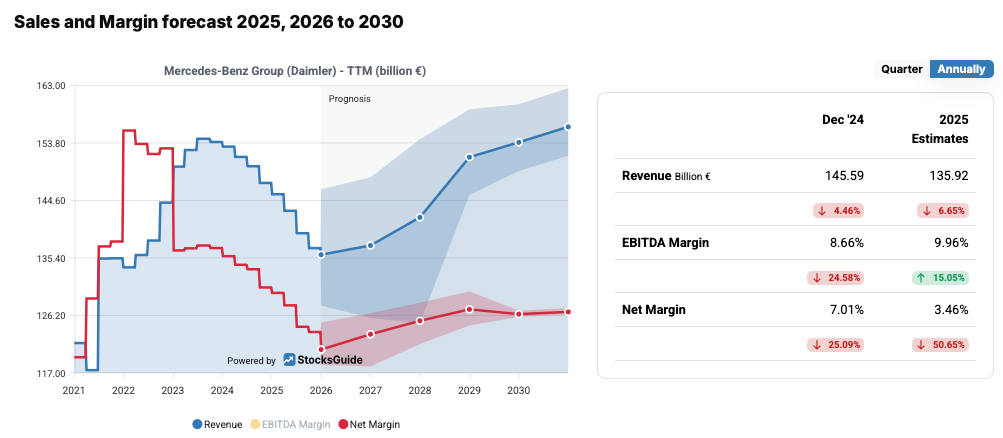
Looking at analysts' forecasts for the group for 2025, this translates into a 6.7 percent decline in sales and a halved net margin of 3.3 percent. However, this should also mark the bottom of the decline. According to analysts, sales will stabilize again in the future at the strong previous year's level of 2023, at 750 billion. Essentially, however, this corresponds to a meager single-digit growth per year.
Key figures for Mercedes-Benz from the Levermann analysis
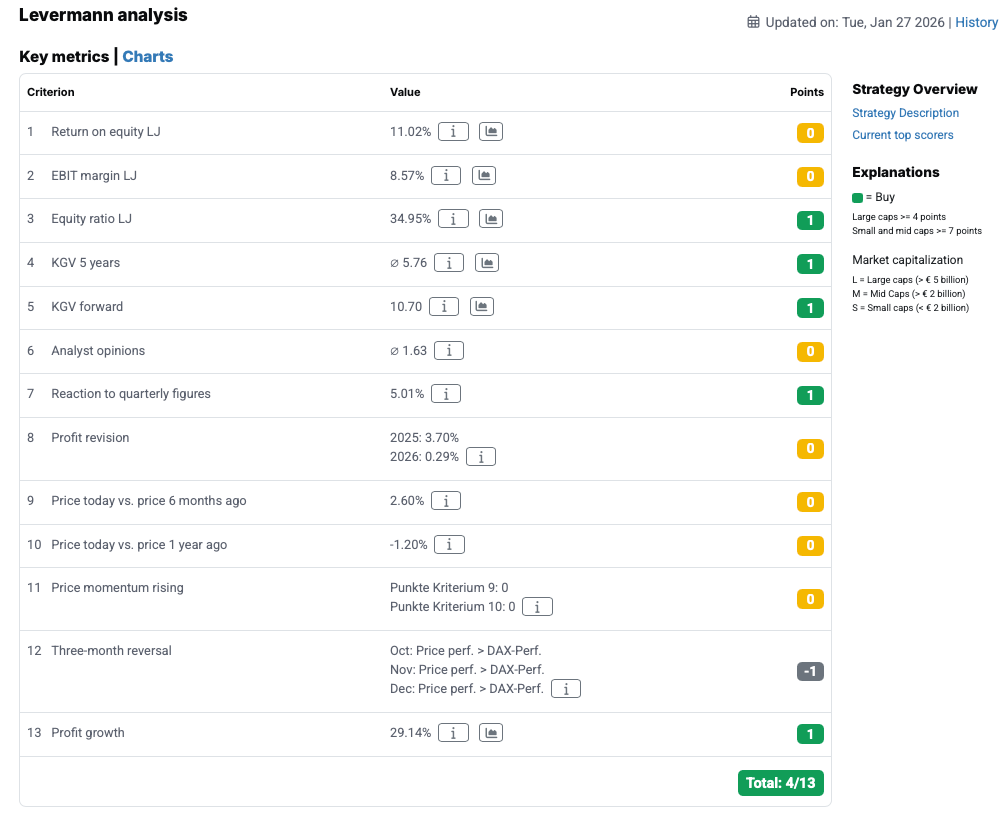
In the Levermann analysis, a stock is evaluated on the basis of 13 quantitative and qualitative criteria. Each criterion can result in plus, zero, or minus points. The total score ultimately shows whether a stock is classified as worth buying, neutral, or unattractive. With 6 out of 13 points, Mercedes-Benz is currently in the attractive range.
Source: Levermann analysis
In terms of profitability, the picture is initially neutral. The return on equity of just over 11 percent and the EBIT margin of around 8.6 percent are not considered strong enough in Levermann's logic and therefore do not earn any points. On the other hand, the equity ratio of just under 35 percent is a positive factor. The stock's valuation is also predominantly positive. The 5-year P/E ratio is calculated from the figures for the last three years and the forecasts for the next two years. At just under 6, it is very low. The expected P/E ratio for the future is also only moderate at around 11. Both criteria, each worth one point, indicate that the stock is not overvalued. However, there are reasons for this, which we will explain in more detail in the following chapter.
Market expectations are cautious. Analyst opinions are generally neutral on average, which is why no points are awarded in this category. Earnings revisions for 2025 and 2026 are also slightly negative or virtually unchanged. This indicates limited optimism in the market and results in no points being awarded.
In the short term, however, the stock has performed well. For example, the market reacted positively to the publication of the latest quarterly figures. The share price performance can be classified as positive compared to both the last six and the last twelve months. Both earned one point. In terms of momentum, however, the rating is weaker. Although the share price has risen, no additional point is awarded for a clear upward momentum. The three-month reversal is even negative, as the share outperformed the market over several months. In Levermann's logic, this is considered a possible short-term downside risk, which is why a minus point is awarded here. On the other hand, the expected earnings growth of 29 percent is very positive. However, this strong growth can also be classified as part of the logic of a cyclical stock. Nevertheless, it is awarded one point in the Levermann analysis.
Valuation of Mercedes-Benz
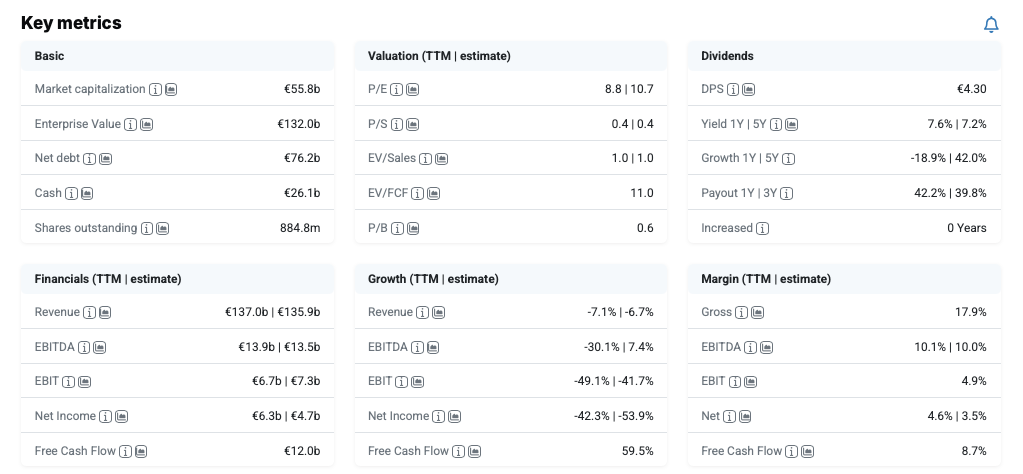
The valuation of Mercedes-Benz paints a mixed but clear picture: on the one hand, the key figures are favorable, but on the other hand, growth expectations are subdued.
Source: key metrics
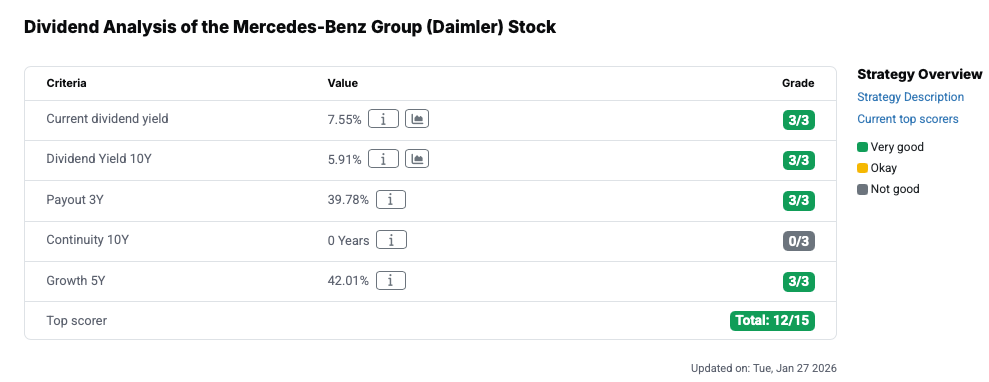
With a price-earnings ratio of 9, for example, the company is well below the long-term market average and below many international car manufacturers. The EV/free cash flow ratio of 11 also signals a moderate valuation. At 7.3 percent, the dividend yield is also very attractive and is one of the stock's greatest strengths. This makes Mercedes-Benz shares particularly interesting for income-oriented investors. At the same time, however, it is also clear that the market is skeptical about the high payout. Exceptionally high dividend yields are often due to limited growth expectations or increased risks. This is also the case with Mercedes-Benz. In the past, dividend cuts have been a frequent occurrence. Nevertheless, the stock performs extremely well in the dividend analysis, scoring 12 out of a possible 15 points.
 Source: Dividend analysis
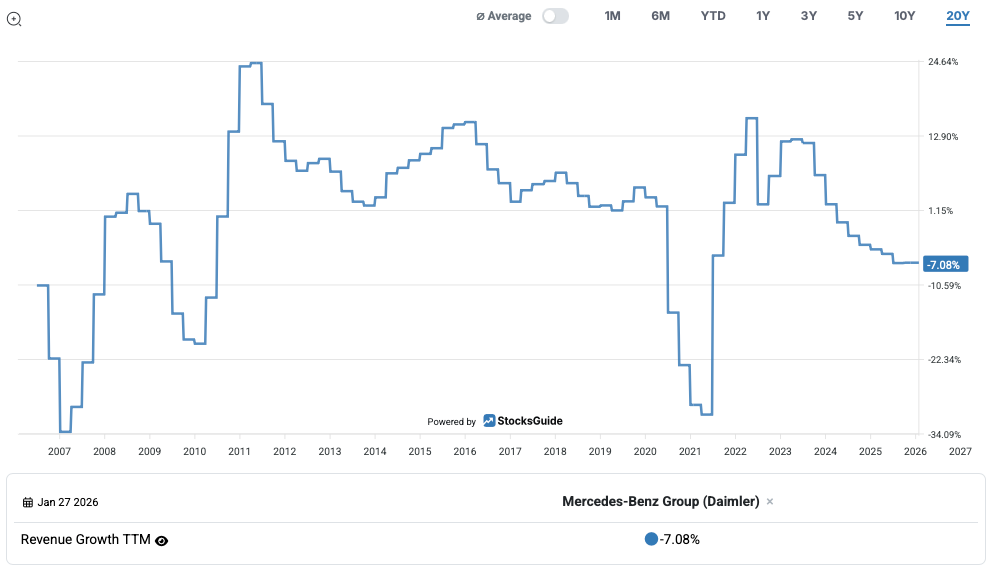
However, the expected sales growth of minus 6.7 percent for the year as a whole should be viewed critically. The comparatively favorable valuation of Mercedes-Benz can be explained less by operational weakness than by several structural and market-related factors that are making investors cautious.
Source: Revenue Growth
One key reason is the strong cyclicality of the automotive industry. Despite its premium focus, Mercedes-Benz is heavily dependent on economic developments. In times of economic uncertainty, investors therefore regularly expect profits to come under pressure quickly. Ultimately, this expectation means that even current high profits are not rewarded with high valuation multiples. Added to this is the strategic decision to forego volume growth. With its “value over volume” strategy, Mercedes-Benz deliberately accepted declining unit sales in order to increase margins. However, the strategy has not really paid off. The expected 6.7 percent decline in sales therefore also points to a strategic misstep. Another important factor is the high level of investment in electric mobility and software. These are weighing on cash flow in the short term and increasing the risk that individual technologies or platforms will not pay for themselves as planned. Many investors are still uncertain whether traditional manufacturers will be able to keep up with new market entrants in the long term in the competition for software and electric mobility. Increasing pressure from Tesla and Chinese electric car manufacturers is raising doubts about long-term pricing power – even in the premium segment.
Source: StocksGuide charts
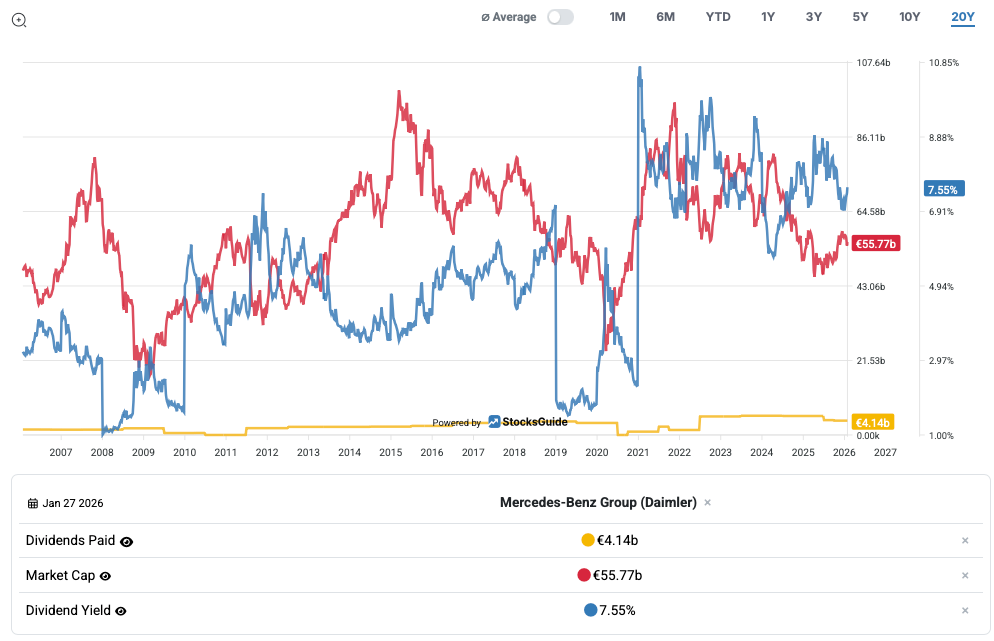
The high dividend yield is more a symptom than a cause of the favorable valuation. It is mainly due to the relatively low share price. Added to this is the general reluctance toward European car manufacturers. Political uncertainties, regulatory requirements, trade conflicts, and dependence on important sales markets such as China mean that investors are structurally avoiding European car manufacturers.
Conclusion on Mercedes-Benz
Overall, Mercedes-Benz presents itself as a financially sound and strategically well-positioned company with a strong brand and high profitability in the premium segment. Its business model is focused on quality, strong margins, and customer loyalty, and is complemented by financial and mobility services. The strategy of focusing more on premiumization than on volume is logical. However, it will probably not be possible to implement it fully, as the economies of scale achieved through higher volume are extremely important.
Analysis of Mercedes-Benz shares shows that they are fundamentally undervalued and are particularly attractive due to their high dividend yield and low valuation ratios. At the same time, the Levermann analysis makes it clear that positive aspects such as valuation, price performance, and earnings growth are offset by subdued market expectations, cyclical risks, and declining sales forecasts. However, competition and technological change are increasing pressure on the group, particularly in the areas of electromobility and software. In order to secure its leading position in the market in the long term, high investments are necessary, which creates uncertainty in the short term and weighs on the valuation. The valuation is therefore understandable. Above all, the latest figures show that the company is currently in a cyclical trough and has not yet provided any conclusive arguments to prove that it has something to counter the competition with.
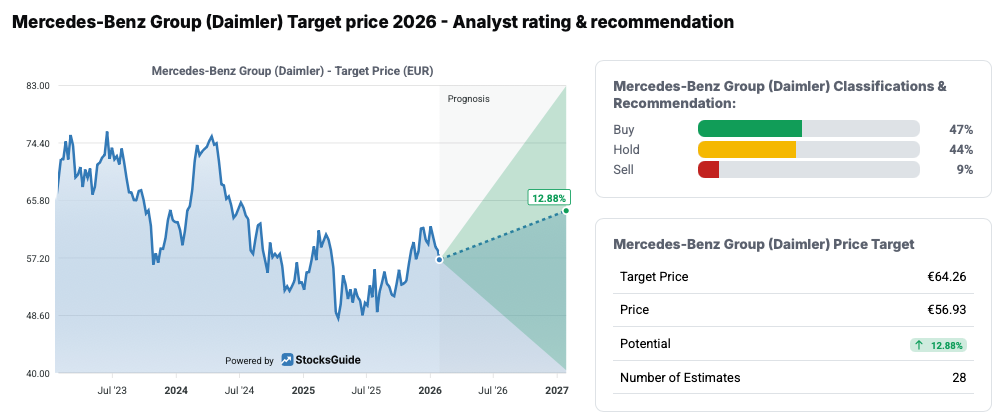
Source: Target price
Current analyst opinions on Mercedes-Benz, on the other hand, paint a relatively balanced picture. Of 28 analyst estimates, 47 percent of experts recommend buying the stock, while 44 percent recommend holding it. Only 9 percent recommend selling. Everything points to a neutral to slightly positive market assessment, with no clear consensus emerging for a strong upward trend.
With an average price target of €64.26, this represents upside potential of around 10 percent over a year, which underscores the cautious stance of analysts. Overall, the recommendations show that Mercedes-Benz is considered a solid and stable company, but one that is not expected to deliver above-average price gains in the short term. Investors looking for more risk buffers can set an alert. A price of €45 would be slightly below the 20-year average.
The author and/or persons or companies associated with StocksGuide own or may own shares of Mercedes-Benz. This article represents an expression of opinion and does not constitute investment advice. Please note the legal information.