Table of Contents
Despite headwinds, global trade is on the rise. It is fueled, among other things, by globalization, e-commerce, and rising prosperity. But how do goods and merchandise get from one place to another? Truck transport has traditionally been a popular method, especially for the last mile. For short and medium distances, no alternative can beat the cost per kilogram. It also offers advantages over rail when it comes to flexibility. In Germany, therefore, around 70 percent of all goods are transported by truck. TRATON (ISIN: DE000TRAT0N7), which is majority-owned by the Volkswagen Group, positions itself in this market as a truck manufacturer with four brands—Scania, MAN, International, and Volkswagen Truck & Bus—making it one of the few groups with true global reach. The company combines European premium technology (Scania), volume strength (MAN), a North American presence (International), and exposure to growth markets in Latin America (Volkswagen Truck & Bus). This multi-brand architecture is also at the heart of the TRATON story and structurally distinguishes the company from purely regional players. Anyone seeking to understand TRATON’s equity story should also consider the profound changes taking place in global freight logistics. It is clear that the industry is undergoing structural transformation. For years, the commercial vehicle industry has faced both far-reaching challenges and opportunities. Issues such as the decarbonization of heavy-duty transportation, the digitization of fleets, autonomous driving, and the redesign of global supply chains are no longer mere visions of the future; they are already shaping day-to-day operations—along with the corresponding challenges.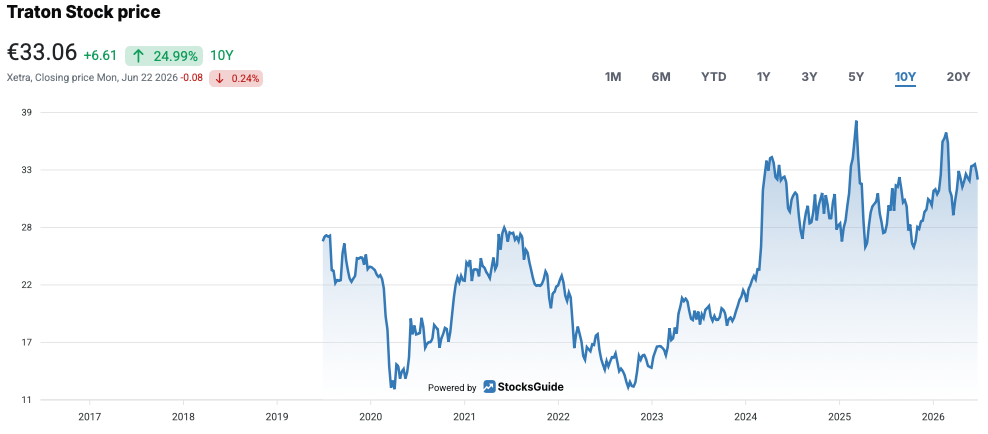
Source: Stock price
All of this is reflected on the stock market in volatile price movements that, however, show an upward trend over the long term. Since the company’s initial public offering in 2019, shareholders have seen their investment grow by a solid 25 percent. On two occasions, however, the stock price fell 50 percent below its previous high. At 33 euros, the stock is now not far from its all-time high. That high was reached in the spring of 2025 at just under 38 euros—driven by strong order intake and robust demand for heavy-duty trucks in Europe. Since then, however, macroeconomic headwinds and geopolitical disruptions have weighed on the stock price: trade disputes between the U.S. and its trading partners, waning demand in Brazil, and a challenging market environment in Europe. Recently, however, the stock has managed to stage a remarkable recovery. With a P/E ratio of 13, the stock is still only moderately valued, even though it offers attractive turnaround and growth potential. In addition, it pays high dividends, and the truck manufacturer also performs exceptionally well in the Levermann analysis. So is the TRATON stock undervalued, or do wage risks, margin pressure, and structural challenges related to the electric vehicle rollout not yet fully reflect the true uncertainties? Today’s TRATON stock analysis provides the facts.
Company Profile – Third-Largest Commercial Vehicle Manufacturer in the World
TRATON SE, headquartered in Munich, is the Volkswagen Group’s commercial vehicle holding company. It was founded in 2015 as an independent entity and listed separately on the stock exchange. Even today, the Wolfsburg-based parent company holds an absolute majority with over 87 percent. The group ranks among the world’s leading manufacturers of trucks and buses (No. 3).
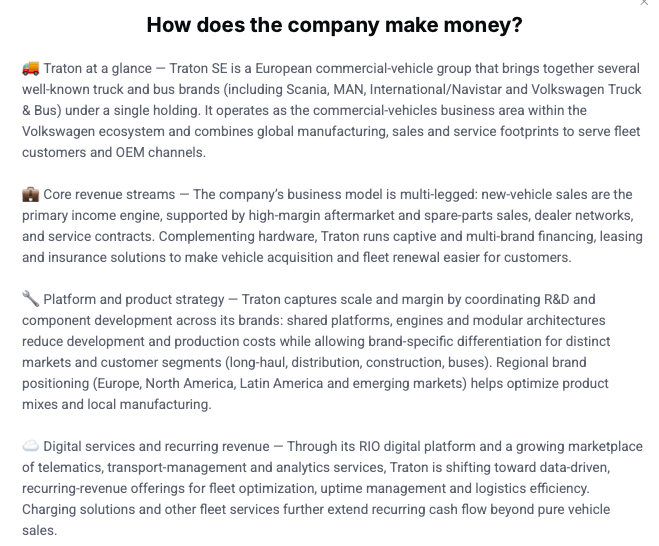
Source: StocksGuide AI
However, the company’s business model is based not only on the sale of vehicles, but also, increasingly, on high-margin services, digital solutions, and financing offerings. By combining various brands with strong regional roots, TRATON covers the world’s most important commercial vehicle markets. The goal is to support customers throughout the entire life cycle of a vehicle and thereby generate long-term, recurring revenue. Nevertheless, it remains a highly cyclical business today. And that is unlikely to change much in the near future.
TRATON Segments
The segments can be categorized as follows:
- Scania Vehicles & Services
- MAN Truck & Bus
- International Motor
- Volkswagen Truck & Bus, and
- TRATON Financial Services
The “Scania Vehicles & Services” segment encompasses the development, production, and sale of heavy-duty commercial vehicles, buses, and industrial and marine engines. Scania has a particularly strong presence in Europe and Latin America, where it positions itself as a premium provider focused on efficiency and cost-effectiveness. In addition to vehicle sales, Scania also generates a portion of its revenue from services such as maintenance and repair contracts, the sale of replacement parts, fleet management, and digital and connected services. These services enable customers to use their vehicles as efficiently as possible. For Scania, this translates to stable and recurring revenue.
In the MAN Truck & Bus segment, TRATON focuses primarily on the European market and offers a broad portfolio of trucks, buses, vans, and engine solutions. MAN generates its revenue primarily through the sale of these vehicles but, like Scania, supplements this core business with comprehensive services. Maintenance, repairs, replacement parts, and digital fleet management systems play an important role in this regard. In addition, MAN is investing heavily in the electrification of commercial vehicle transportation and is developing battery-electric trucks and buses. The goal is to benefit from the transformation of the transportation industry and to tap into new business opportunities in the field of sustainable mobility.
The International Motors segment forms the North American pillar of the TRATON Group. Here, the company primarily develops and sells medium- and heavy-duty trucks, school buses, and specialty vehicles for customers in the U.S., Canada, and Mexico. As in the previously mentioned segments, revenue is generated on the one hand through vehicle sales and on the other hand through a comprehensive range of services and spare parts. However, it has also come to hold particular strategic importance for TRATON, as North America ranks among the world’s largest and most profitable commercial vehicle markets. In 2021, the company went on the offensive with the $3.7 billion acquisition of Navistar. At the same time, the integration enables the leveraging of synergies within the Group. Through shared vehicle platforms, technologies, and development projects, the goal is to create economies of scale and increase the competitiveness of all brands.
The Volkswagen Truck & Bus segment is primarily active in Brazil and other Latin American countries. Here, TRATON develops and manufactures trucks and buses that are specifically tailored to the requirements of these markets. The focus is on robust and cost-efficient vehicles that operate reliably even under difficult operating conditions. The business model is once again based on the sale of these vehicles, as well as on complementary services and spare parts offerings. However, strong local production enables the company to respond very flexibly to regional market demands while simultaneously reducing cost and currency risks. The segment’s development is closely linked to economic growth and infrastructure expansion in the respective countries.
The final segment, TRATON Financial Services, encompasses financial and mobility services. Many customers opt for leasing or financing models instead of purchasing vehicles outright. TRATON Financial Services provides suitable solutions for this purpose, thereby supporting sales of the Group’s vehicle brands. At the same time, the segment generates its own revenue through interest, lease payments, and insurance services. Furthermore, the financial business strengthens customer loyalty, as customers often remain connected to the Group for several years. For TRATON, the financial division is therefore not only an additional source of revenue but also an important tool for promoting sales and stabilizing business performance.
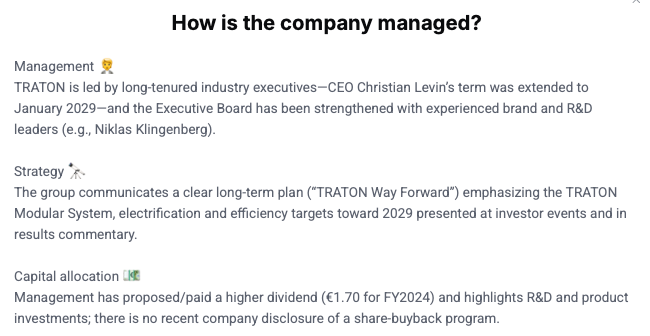
Source: StocksGuide AI
The company is led by CEO Christian Levin, who also serves as President and CEO of Scania. This dual role underscores the importance of the Swedish premium brand to the Group. Dr. Michael Jackssstein serves as CFO and CHRO (Chief Human Resources Officer). Strategically, TRATON pursues the “TRATON Way Forward,” which consists of four elements: responsible business, value creation, “TRATON Accelerated!” and consistent strategy implementation. Capital allocation is focused on three priorities: investments in the TMS (TRATON Modular System, a core project for the modularization and standardization of vehicle development), electrification, and debt reduction. With an attractive dividend policy of around thirty percent of net income, TRATON is deliberately positioning itself as a strong dividend payer. However, the greatest potential for growth may lie in improving efficiency. In this area, TRATON has significant ground to make up compared to its competitors.
Market & Competition
The global market for heavy-duty commercial vehicles with a gross vehicle weight rating of over 16 metric tons is highly oligopolistic. Due to the high demands for investment in research and development, production capacity, sales and service networks, and regulatory compliance, it is therefore dominated by a small number of globally active manufacturers. The key players include Daimler Truck, Volvo, TRATON, and PACCAR. In certain regions, other providers such as the FAW Group and SINOTRUK also play a significant role. These companies account for the majority of global sales volume and compete on product quality and technology, as well as on cost structures, service offerings, and financing services.
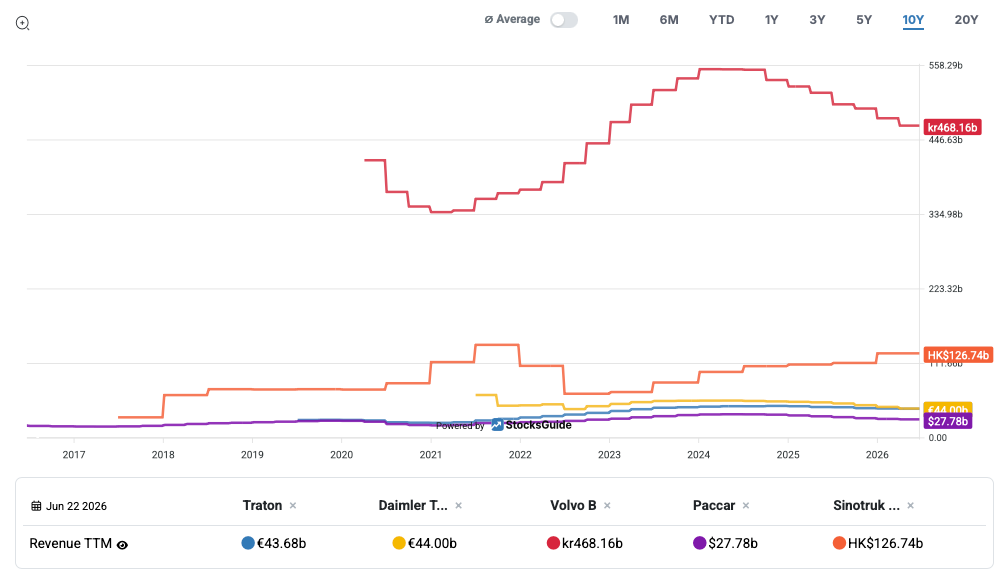
Source: Revenue TTM
The industry is characterized by pronounced cyclicality. Demand for heavy-duty commercial vehicles is closely linked to general economic trends, as investments in trucks are typically made by transportation and logistics companies. During economic upturns, freight volumes naturally increase, and with them, customers’ willingness to invest. Economic downturns, on the other hand, lead to the postponement or cancellation of vehicle orders. In addition, interest rates and the availability of financing also influence demand, as a large portion of fleets is financed through leasing or loan arrangements. In addition, manufacturers are facing growing regulatory pressure, particularly from stricter emissions regulations and CO₂ fleet limits in Europe, as well as stricter environmental standards in North America. In Europe, competition is primarily shaped by four major manufacturers. Market leadership is shared by Daimler Truck with its Mercedes-Benz Trucks brand, the Volvo Group with its Volvo Trucks and Renault Trucks brands, TRATON SE with its Scania and MAN Truck & Bus brands, and PACCAR with its DAF brand. All four companies have established sales and service networks, strong brand recognition, and significant economies of scale. This makes it difficult for new competitors to enter the market. The North American market is also dominated by a few major suppliers. In particular, Daimler Truck’s North American subsidiary competes there with the Freightliner and Western Star brands, PACCAR with the Kenworth and Peterbilt brands, and International Motors (formerly Navistar). The latter has significantly strengthened its presence in North America through its acquisition by TRATON. The strong market position of these suppliers is based on long-standing customer relationships, dense dealer networks, and the high brand loyalty of many fleet operators. In South America, the Volkswagen Truck & Bus segment has traditionally held a significant market position. In Brazil in particular, the company has been one of the leading manufacturers of trucks and buses for years. However, the South American market is characterized by high economic volatility. Following a period of strong demand, a significant decline in demand is expected for the years 2025 and 2026. This is primarily attributable to weaker economic growth, higher financing costs, and customers’ reduced willingness to invest. In addition to regional market conditions, however, technological change in particular is altering the competitive dynamics of the industry. The electrification of freight transport means that traditional competitive advantages, such as engine technology or production capacity, must increasingly be complemented by expertise in battery technology, software development, and charging infrastructure. Manufacturers that establish efficient battery supply chains early on, develop their own digital platforms, and offer integrated charging solutions have the potential to gain long-term competitive advantages. As a result, competition is shifting from a product-oriented to a technology- and service-driven competitive landscape. In addition, geopolitical and trade policy developments are influencing competitive conditions. In particular, the trade tariffs imposed by the U.S. on steel, aluminum, and other imported goods are increasing production costs for many manufacturers and intensifying pressure on margins. Companies with high local value-added are generally better able to cushion such pressures than competitors with more globalized supply chains. At the same time, Chinese manufacturers such as SINOTRUK and the FAW Group are seeking to expand their international presence. Although they have already gained market share in various emerging markets, they have not yet played a significant role in Europe and North America. Reasons for this include stringent regulatory requirements, established competitors with strong brands, and high customer expectations regarding quality, service, and residual value stability. Nevertheless, Chinese suppliers—particularly in the electric commercial vehicle sector—could gain importance in the long term and increase competitive pressure in the industry.
TRATON’s Latest Quarterly Results from March 2026
Overall, the first quarter of 2026 was subdued for TRATON, as expected, but better than the declining sales and revenue figures might initially suggest. The significant increase in order intake, rising demand for electric vehicles, and the stable performance of the high-margin service business suggest that business performance could improve as the year progresses.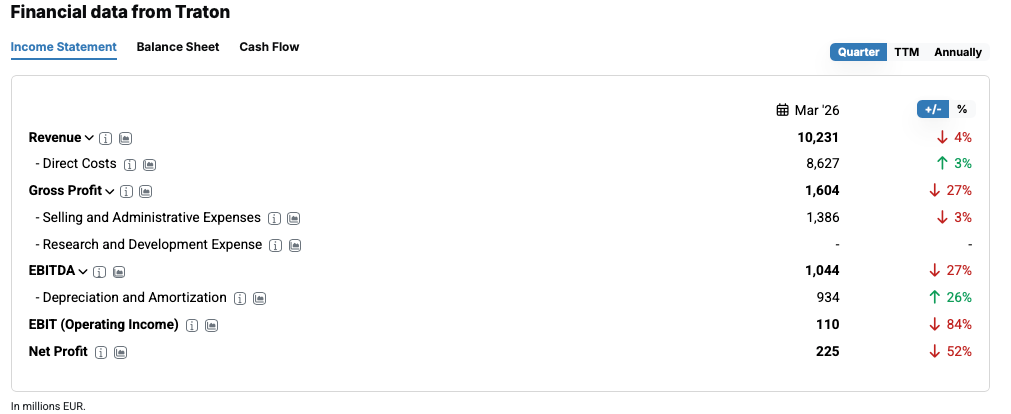
Source: Financial data
Although sales volume, revenue, and profitability declined compared to the same quarter of the previous year, order intake showed a clearly positive trend. Specifically, the Group sold 68,604 vehicles in the first quarter, representing a 6 percent decline compared to the same period last year. Revenue declined by a relatively moderate 4 percent to 10.2 billion euros. The service business performed particularly well, with its share of Group revenue rising from 21 to 22 percent. Since service activities typically generate higher margins than the vehicle business, this had a stabilizing effect on business performance. Operating profit, however, fell by 84 percent to 110 million euros. Higher customs duties in the U.S., which had not yet been incurred in the same quarter of the previous year, had a particularly negative impact. At the same time, TRATON was able to partially offset these effects through consistent cost discipline and lower fixed costs. Overall, the reported operating profit was impacted by one-time charges totaling 521 million euros. In contrast, order intake developed particularly well. Orders rose by 18 percent to 87,775 vehicles, resulting in an order backlog that was significantly stronger than current sales. The book-to-bill ratio improved from 1.0 to 1.3, signaling rising demand. Orders for heavy-duty trucks in North America, in particular, showed very strong growth. At International Motors, however, order intake for heavy commercial vehicles was approximately 81 percent higher than the previous year’s level. Demand for battery-electric vehicles also increased significantly. While sales of electric vehicles rose by 38 percent, order intake increased by as much as 45 percent.
At the segment level, however, the picture was mixed. Scania once again proved to be a profitable cornerstone of the Group and kept its adjusted operating margin virtually stable at 11 percent. Although vehicle sales declined, this drop was partially offset by a growing service business. Scania also benefited from a government-subsidized loan program for fleet renewal in Brazil. MAN Truck & Bus also performed well. Revenue in this segment rose by 8 percent to 3.3 billion euros, while the adjusted operating margin improved significantly from 4.3 to 7.2 percent. This was driven by an improved cost structure, higher revenue, and efficiency gains. Order intake remained nearly stable despite a weaker German market. In contrast, International Motors had a weak quarter. The Group’s U.S. division reported a negative adjusted operating margin of minus four percent, after having achieved a positive margin in the previous year. In addition to lower sales figures, increased U.S. tariffs in particular weighed on profitability. However, the strong improvement in order intake points to a possible recovery in the coming quarters. Volkswagen Truck & Bus also saw a decline in profitability. The adjusted operating margin fell from 13 percent to 10.2 percent. This was primarily due to lower vehicle sales and negative currency effects. On the other hand, Brazil’s subsidy program for the renewal of truck fleets had a positive effect, leading to an 11 percent increase in order intake. The TRATON Financial Services division, on the other hand, performed steadily. Revenue rose by 13 percent to 598 million euros, while adjusted operating profit increased to 52 million euros. The operating margin remained unchanged at a high level of 8.7 percent.
Source: Q1 2026 Earings Call
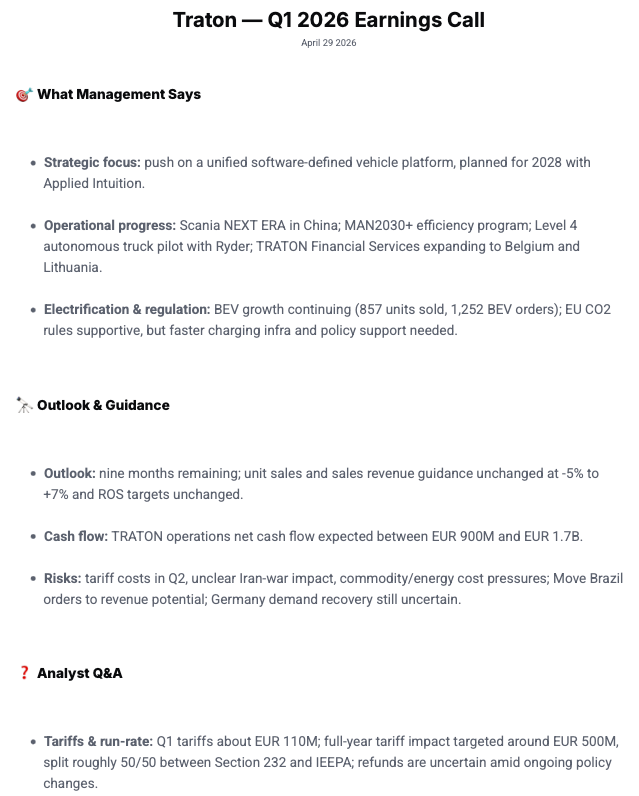
During the earnings call on the Q1 results, management elaborated that the development of the software-defined vehicle platform TRATON ONE OS, in collaboration with the software company Applied Intuition, represents a key strategic focus for TRATON. The platform, scheduled for 2028, is intended to create a unified software and electronics architecture for all of the Group’s brands. This could give TRATON a significant competitive advantage in the increasingly software-driven commercial vehicle market. At the same time, the “TRATON Modular System” (TMS), the “MAN2030+” efficiency program, and the greater consolidation of development activities are expected to boost competitiveness. By integrating approximately 9,000 engineers, the company expects to realize efficiency gains of about 25 percent in vehicle development. TRATON is also driving change in the field of electromobility. Sales of battery-electric vehicles recently rose by 38 percent to 857 units. At the same time, the company emphasizes the need for faster expansion of the charging infrastructure and calls for corresponding political support. In addition, TRATON is making targeted adjustments to individual e-mobility projects to better align investments with market conditions.
TRATON Stock Forecast for 2026
Despite a slow start to fiscal year 2026, TRATON has confirmed its full-year forecast. Management continues to expect sales volumes and revenue for the full year to range from a 5 percent decline to a 7 percent increase compared to the previous year. At the same time, the Group anticipates an adjusted operating profit margin of between 5.3 and 7.3 percent. The confirmation of the outlook is based in particular on the significant increase in order intake in the first quarter. With an 18 percent increase and a book-to-bill ratio of 1.3, demand significantly exceeded current deliveries. Management estimates that this positive order trend should increasingly translate into higher sales volumes and improved business performance in the coming quarters. TRATON draws additional confidence from the rising demand for heavy-duty commercial vehicles in North America as well as from the dynamic growth in the battery-electric vehicle segment. Both sales figures and order intake for electric vehicles developed very positively in the first quarter, underscoring the progress made in the Group’s transformation toward zero-emission powertrains. At the same time, however, the outlook remains marked by significant uncertainties. Management points in particular to the persistently difficult geopolitical and economic situation. Among the greatest risk factors are the U.S. government’s tariff policy, potential further trade restrictions, and the economic consequences of international conflicts, particularly the war in Iran. Against this backdrop, TRATON continues to prioritize strict cost discipline to cushion potential impacts and secure its targeted profitability 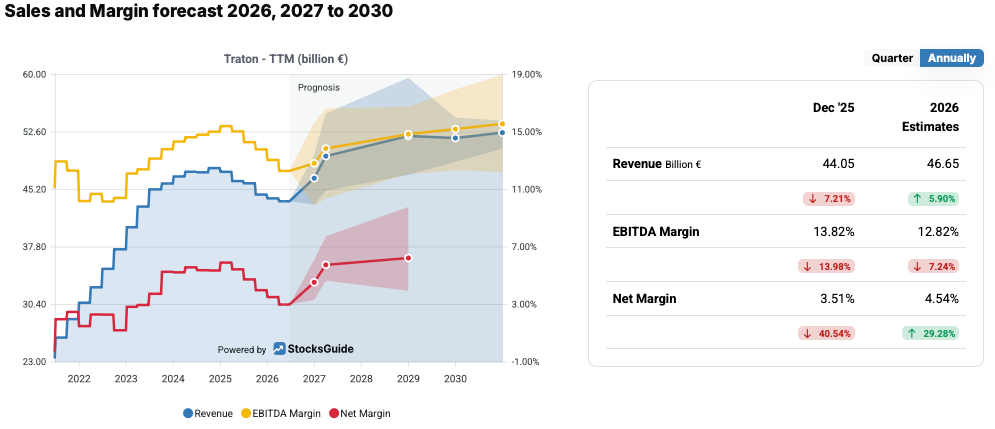
Source: Sales and Margin forecast
Analysts share a similar view of this trend, though with a more conservative outlook. Revenue growth of 5.9 percent to 46.7 billion euros is forecast for 2026. At the same time, net income is expected to recover from the extraordinary charges incurred in fiscal year 2025. A net margin of 4.5 percent for 2026 appears realistic.
Key metrics for the TRATON stock from the Levermann analysis
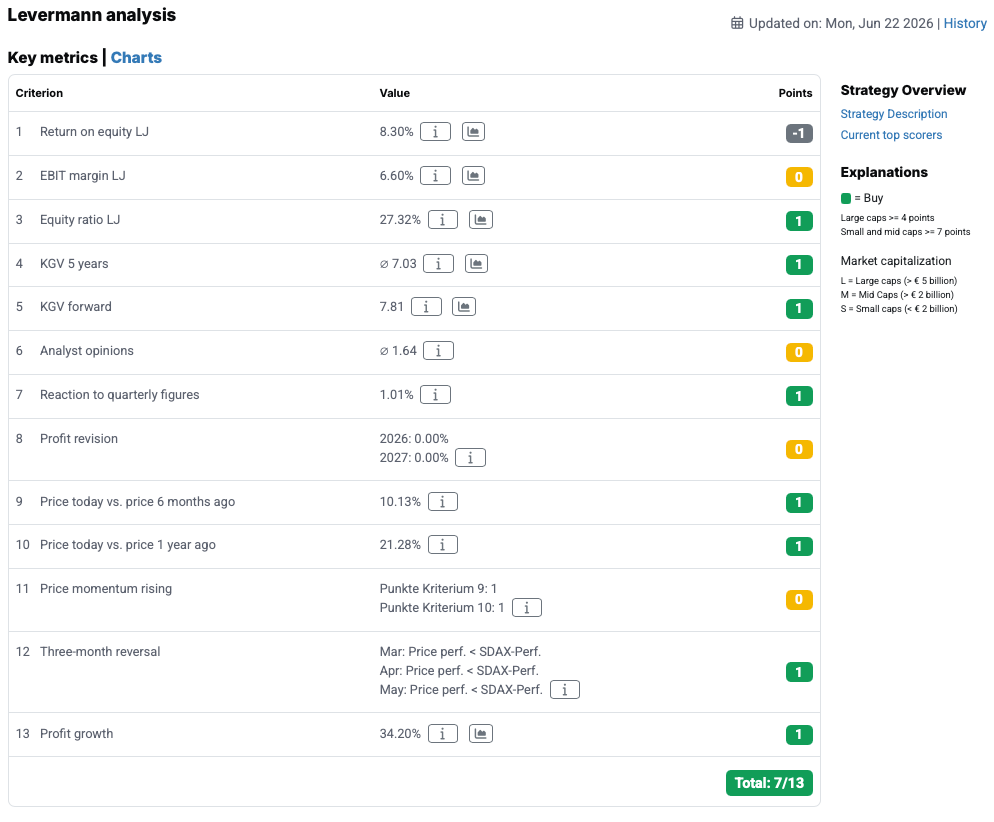
The Levermann analysis is a quantitative valuation method for the systematic selection of stocks. It combines 13 fundamental and technical metrics—such as profitability, valuation, earnings growth, analyst estimates, and price behavior—into an overall score. The goal is to identify promising stocks based on objective criteria and to avoid emotional investment decisions. A higher score indicates a more attractive investment opportunity. The TRATON stock currently scores 7 out of a possible 13 points in the Levermann model, resulting in an overall positive rating.
Source: Levermann analysis
The stock’s attractive valuation—with an average P/E ratio of 7 over a five-year period (three past years and two expected years) and a forward P/E ratio of 7.8—is particularly favorable, each of which contributes one point. Historically, however, the stock has always been undervalued.
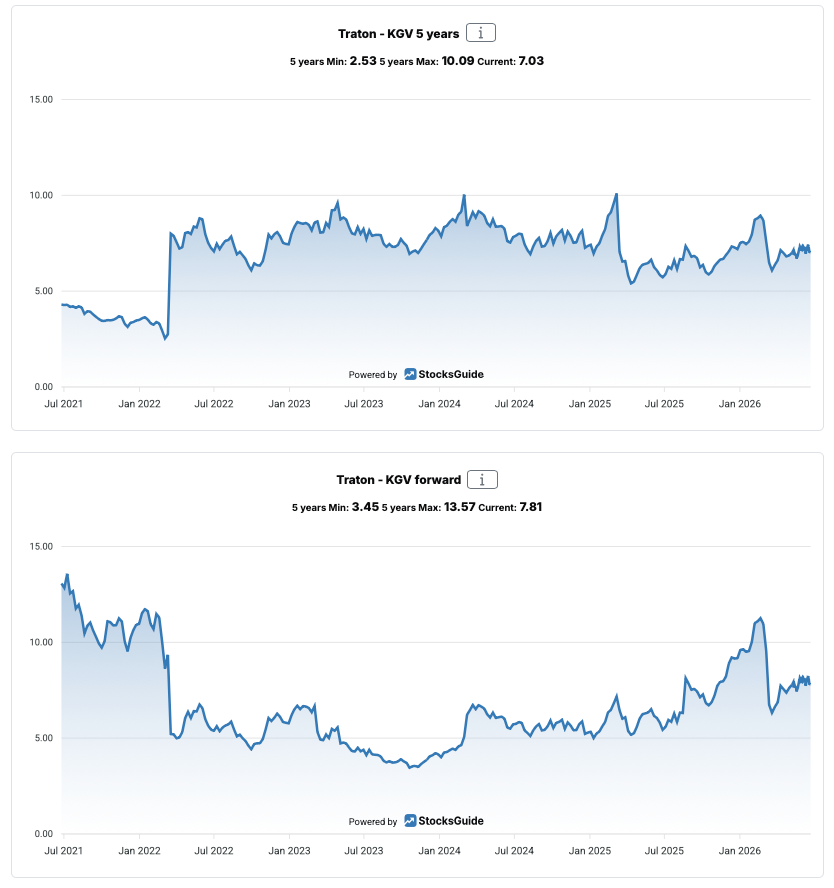
Source: KGV evolution
Other positive factors include the solid equity ratio of 27.3 percent, strong earnings growth of 34.2 percent, and the positive stock price performance over the past six and twelve months, respectively.
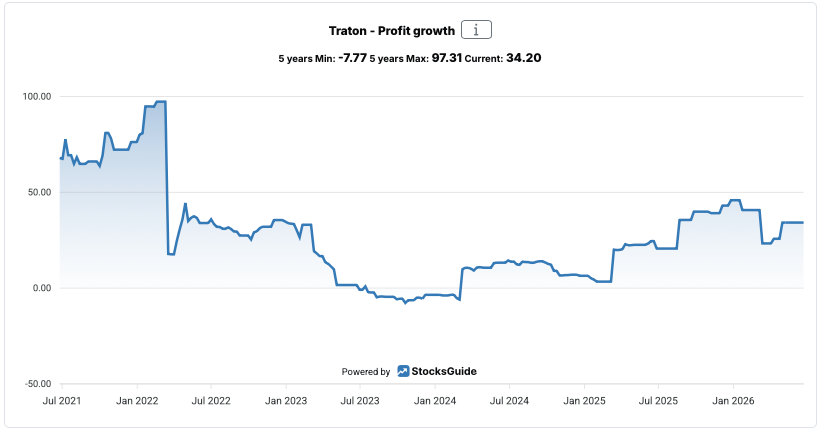
Source: Profit growth
The result is further supported by the positive market reaction to the latest quarterly figures and the favorable three-month reversal. Less convincing, however, are the return on equity of 8.3 percent—which is rated negatively in the Levermann system—and the merely average EBIT margin of 6.6 percent. Furthermore, there is currently a lack of positive momentum from analyst earnings revisions or particularly optimistic analyst estimates. Although analysts rate the stock positively, this is considered a contraindicator in the Levermann analysis and is given a correspondingly low weighting.
Valuation of the TRATON Stock
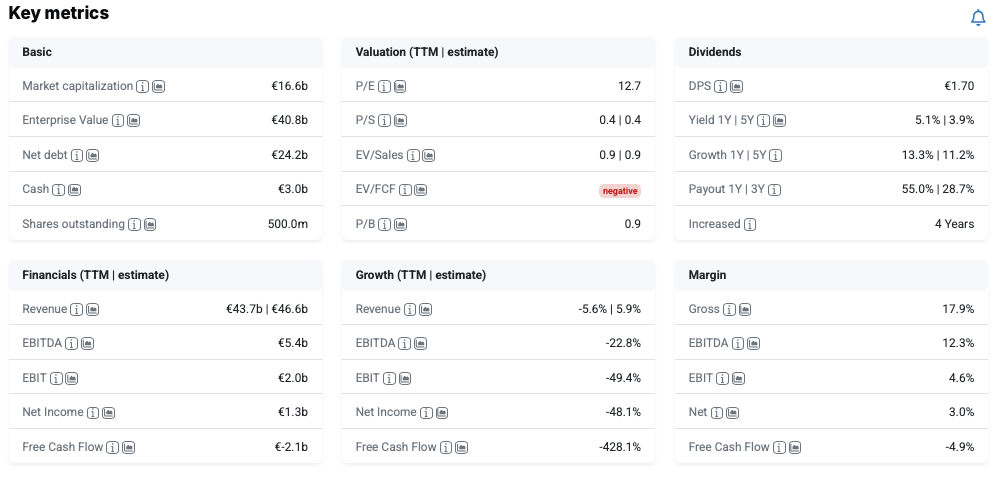
The valuation of the TRATON stock appears moderate overall. Although the company is no longer valued as favorably as in previous years—with a current price-to-earnings ratio (P/E ratio) of 12.7—it remains at a level appropriate for the commercial vehicle industry.
Source: Key metrics
The price-to-book ratio of 0.9 indicates that the stock is trading below its book value, suggesting a comparatively favorable market valuation. The negative free cash flow multiple, on the other hand, is of limited significance, as it is based on negative free cash flow. This is primarily due to increased investments and temporary burdens, which make a traditional valuation based on cash inflows difficult. Another negative factor is the recent decline in revenue growth of -5.6 percent, which reflects the currently weaker market momentum. At the same time, however, analysts expect growth to accelerate again to just under 6 percent in the coming years. This could be the result of an improvement in the market environment as well as positive effects from efficiency programs, digitalization, and the electrification strategy.
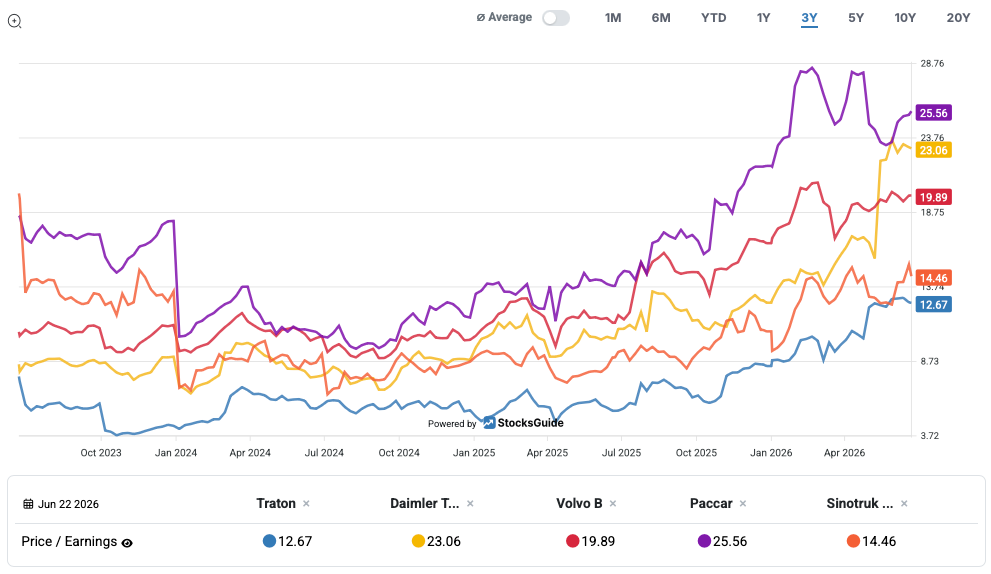
Source: Price / Earnings
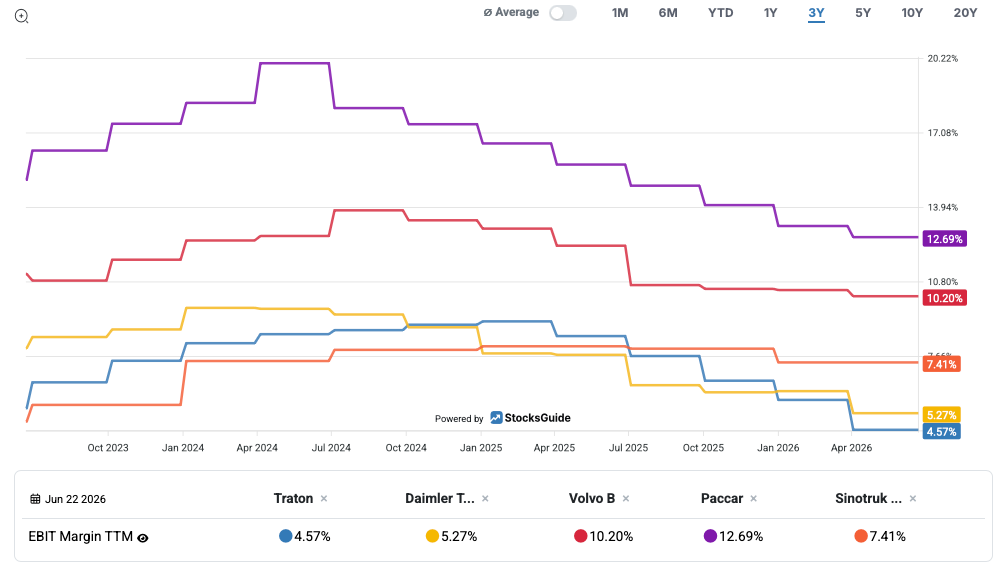
Source: EBIT Margin
The key valuation argument, however, is the margin gap relative to peer companies: While the Volvo Group and PACCAR achieve margins of 10 to 12 percent, TRATON operates at less than 5 percent. If the efficiency improvements driven by TMS are successful, a move toward 9 to 10 percent over the next three to five years is realistic. This could enable a significant jump in profits even without revenue growth. However, the discount relative to comparable companies can also be explained by other factors. On the one hand, the integration of International Motors (U.S.) is not yet complete; on the other hand, the U.S. tariff risk is difficult to quantify, and the BEV investment program requires substantial upfront investments that weigh on short-term margins. In addition, the market reflects a certain degree of skepticism regarding management’s ability to deliver the TMS on schedule.
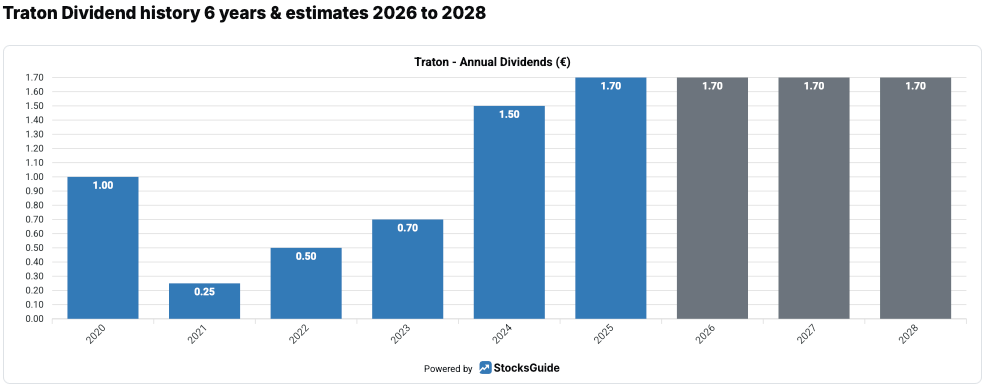
Source: Dividend history
On the other hand, the approved dividend of 0.93 euros per share for fiscal year 2025 still corresponds to a yield of around 2.7 percent at current stock prices. While this isn’t a record high, it’s solid. It should also remain stable in the coming years.
Conclusion on TRATON Stock
TRATON is a stock for investors who believe in management’s ability to deliver results over the medium term and are willing to weather short-term uncertainties. The equity story is clear: the combination of platform synergies (TMS), a global multi-brand portfolio, and a growing service business offers structural upside potential for profitability. The currently attractive valuation level (forward P/E of approximately 8, price-to-sales ratio below 0.4, and P/B ratio below 1) offers a small margin of safety, provided the forecast for 2026 is met.
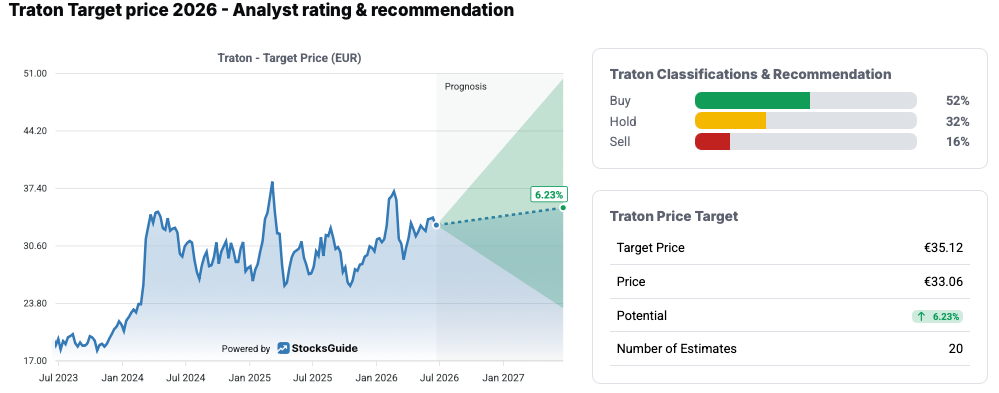
Source: Target price
Analysts, on the other hand, are divided but show a slight bias toward buying: Of the 20 analysts covering the stock, 52 percent recommend buying, 32 percent advise holding, and 16 percent recommend selling. The average price target is about six percent above the current price. The key risk message is therefore this: TRATON is not a stock for conservative investors with a short investment horizon. Tariff shocks, potential TMS delays, the market rollout of electric mobility, and cyclical fluctuations in the commercial vehicle market make the stock a bet on management’s ability to deliver in a complex environment. However, investors willing to wait two to three years might find TRATON stock to be a potential turnaround candidate with substantial upside potential—provided the TMS synergies and the recovery in the second half of 2026 materialize as planned. For anyone who wants to continue monitoring the stock, setting an alert may be worthwhile. An interesting level to watch could be a price marker near the previous lows below 26 euros, which would be a good point to take another look at the stock.
The author and/or persons or companies associated with StocksGuide own or may own shares of TRATON. This article represents an expression of opinion and does not constitute investment advice. Please note the legal information.