With the rise of remote work and globally operating teams, payroll processing is becoming increasingly complex for companies. Differing tax procedures, tax laws, social security, health insurance, benefits, compensation systems, and much more have become too great a challenge for many companies. This is precisely where the advantage of Human Capital Management (HCM) providers lies. They handle payroll processing, prepare tax returns, assist with social security, and collaborate with pension funds to ensure a smooth transition into retirement. The largest provider in this field is Automatic Data Processing (ISIN US0530151036), or ADP for short.
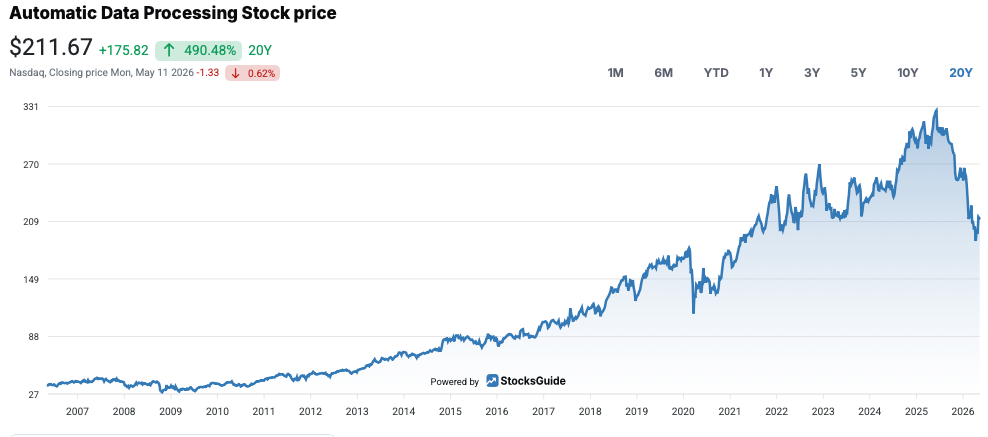
Source: Stock price
We previously analyzed this stock about three years ago.
At the time, the valuation seemed high to us, with a price-to-earnings ratio of 30. Now, the stock has corrected by 30 percent over the past 12 months and is trading well below its all-time high of $326 from a year ago. The drawdown is greater than during the 2008 global financial crisis or the COVID-19 crash in March 2020.
The reason for the sharp decline in the American stock’s price is—once again—concerns about potential disruption from AI. The large language models (LLMs) from OpenAI, Anthropic, and others could reduce the need for labor, which would have a direct impact on the payroll sector. Additionally, AI tools could help bring previously outsourced HCM tasks back in-house.
ADP and its competitors are thus at a crossroads.
Counter-cyclical investors could currently take advantage of this uncertainty, as a favorable entry point may be emerging for a long-term compounder. In this ADP stock analysis, we focus on the potential disruption caused by AI, ADP’s positioning in the payroll sector, and the latest quarterly results.
Company Profile: Automatic Data Processing – Market Leader in Payroll Processing
Since 1949, Automatic Data Processing has been providing human capital management services.
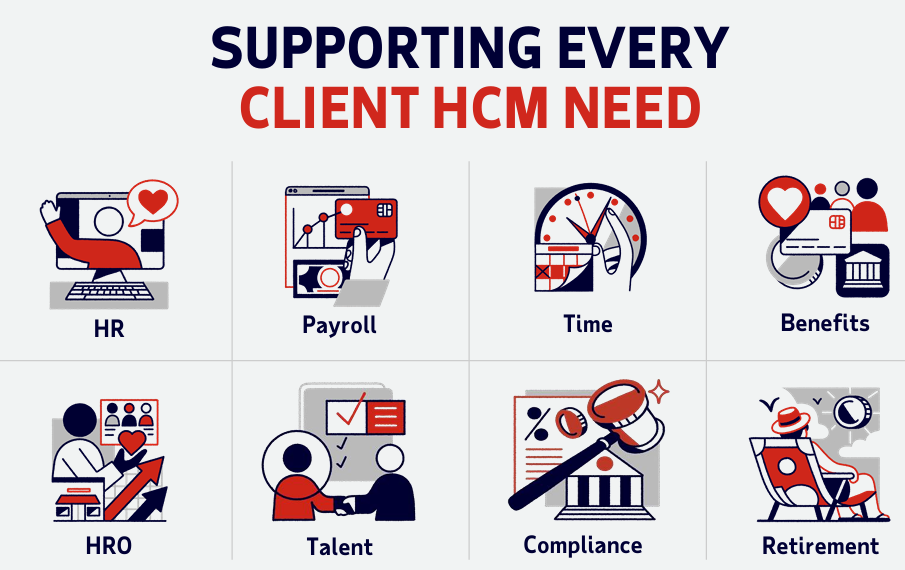
Its comprehensive range of services includes payroll processing, tax return preparation, travel expense reimbursement, recruitment of new talent, collaboration with pension funds, and time tracking.
Source: ADP Companypresentation
In addition, there are offerings in the areas of human resources, automation of compliance checks, onboarding of new employees, and the creation and management of benefits.
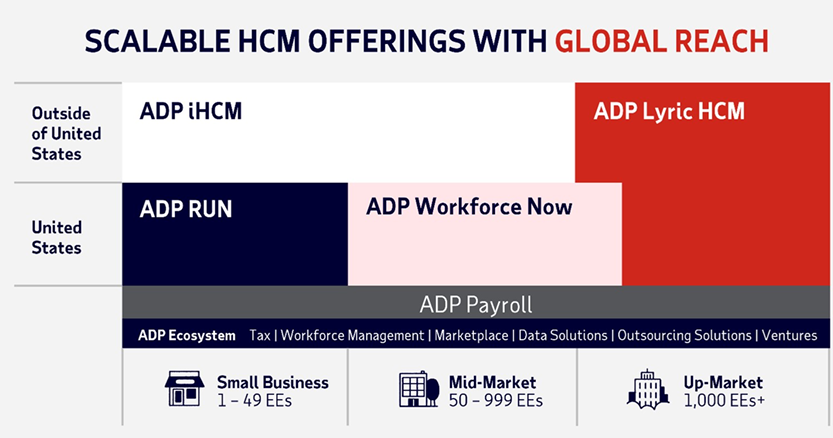
ADP relies on a variety of tools tailored to companies of different sizes.
With “Workforce Now,” ADP offers the most widely used HCM software in the U.S. mid-market—companies with between 50 and 1,000 employees. Over 90,000 companies of this size are Workforce Now customers.
Source: ADP
“Run” is a similar tool designed for startups. Run is used by 940,000 small businesses in the U.S. However, the flagship product is ADP Lyric HCM, which offers globally operating enterprise customers with 1,000 or more employees seamless execution of all HCM tasks. This software was introduced in September 2024 and was named “Data Solution of the Year” the following year.
ADP thus offers a wide range of solutions for businesses of all sizes. The figures behind its diversified product and customer portfolio are impressive.
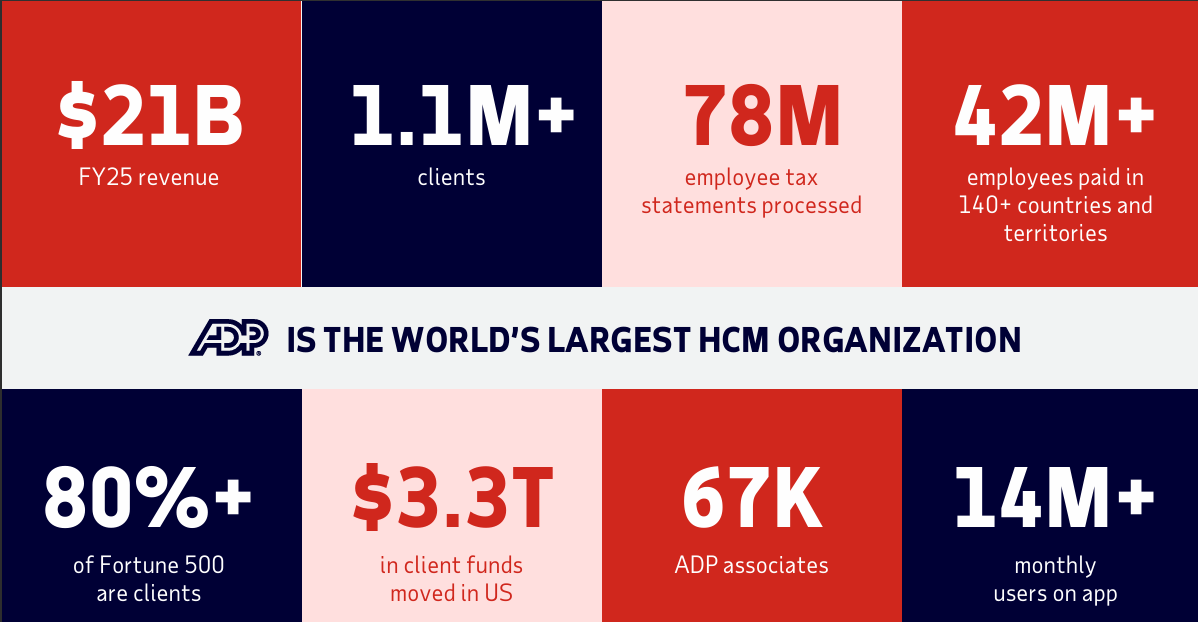
Over 1.1 million companies worldwide are customers of Automatic Data Processing. The American company handles payroll for over 42 million employees.
Source: ADP Companypresentation
In addition, 80 percent of Fortune 500 companies are ADP clients.
In addition to the vast volume of data that ADP manages on behalf of its clients, the payroll leader processed $3.3 trillion in payroll payments in 2025.
The processing of payroll payments generates an additional revenue stream for ADP. The high liquidity resulting from regular customer inflows is utilized in the capital markets. Last year, ADP generated over $1 billion in additional revenue.
It is already clear that Automatic Data Processing is deeply embedded in many American companies, making the switching costs for these companies appear high. ADP is virtually irreplaceable, particularly among the globally operating Fortune 500 corporations, which represents a wide moat.
We will revisit the various segments of ADP’s revenue later.
AI Agents at ADP - AI App Store for Third-Party Providers
The biggest concern for many investors is the two-sided disruption caused by AI. On the one hand, AI optimization could eliminate many jobs, which form the core of ADP’s business. Furthermore, companies can manage their own HCM tasks using their own AI tools.
Both points have been refuted by ADP management. ADP is aware that AI could lead to fewer new jobs being created in the future, which could slow the growth of the number of people to be processed. That is why ADP is attempting to monetize its user base even more effectively by integrating its own AI solutions.
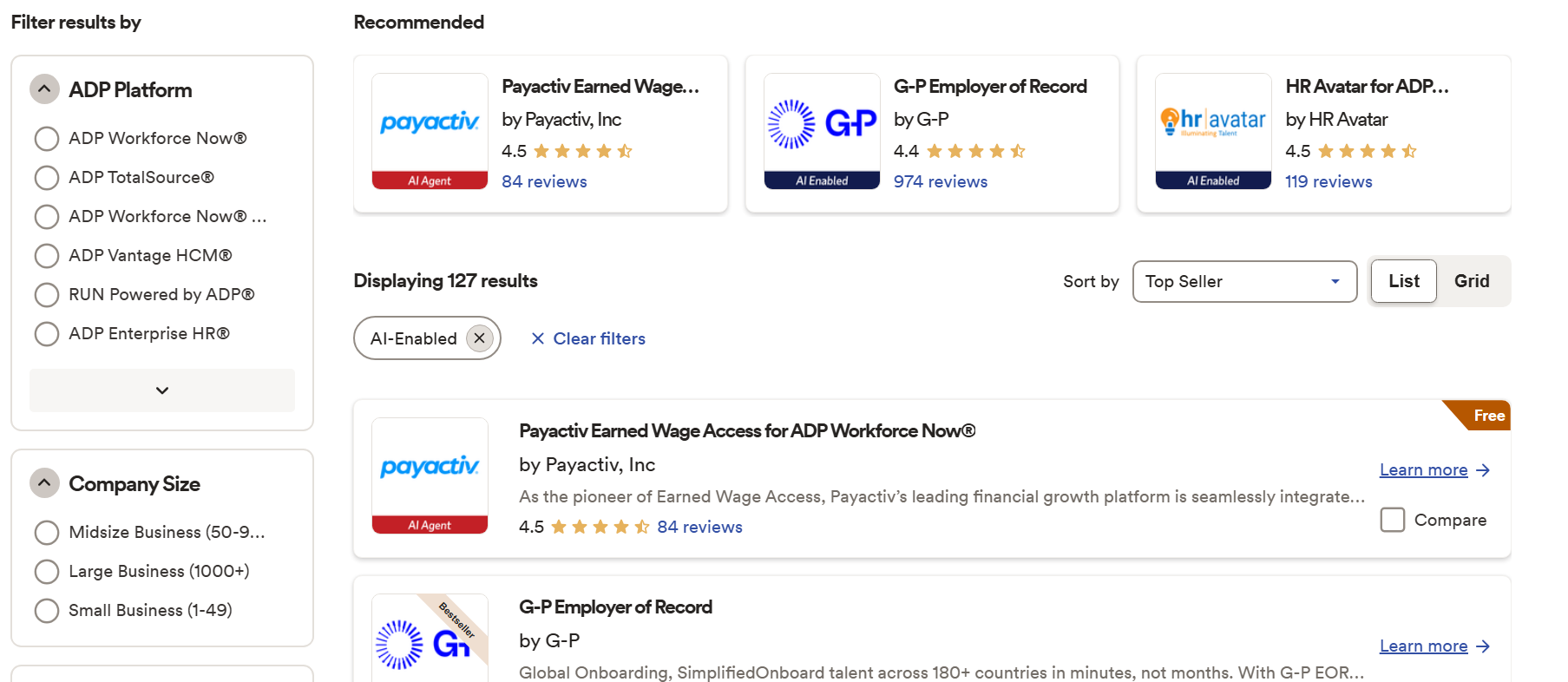
With the ADP Marketplace, the company has created a foundation for this.
This is an app store for all HCM applications.
Source: ADP Marketplace
Customers can use the marketplace to download apps tailored to their company size and needs and roll them out to their workforce.
ADP has most of the tools developed by third-party providers. This has the advantage for ADP that it does not have to bear the development costs itself. In addition, each app is tailored to specific processes and company sizes. This makes it easier for customers to maintain an overview than when using a large HCM system.
However, the risks should not be overlooked. Every new app can pose security risks and should be carefully reviewed.
Following the latest quarterly results, management has reiterated that disruption from AI is not currently expected.
ADP Revenue Mix - Diversified Customer Portfolio
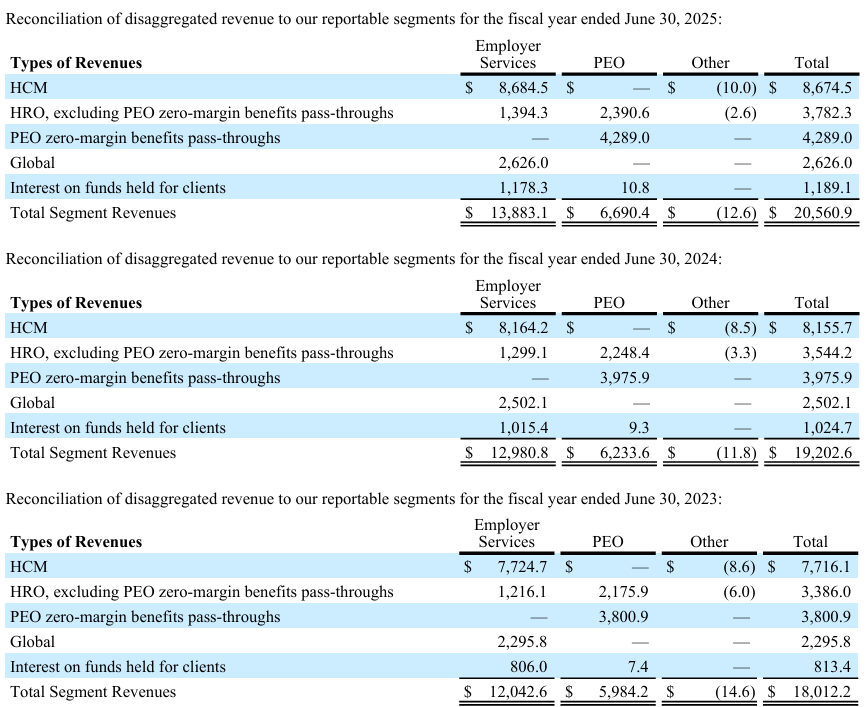
Automatic Data Processing’s revenue mix is broadly diversified. For the fiscal year 2025 (ended June 30, 2025), the company generated approximately $20.5 billion in revenue. The company divides its business into two segments: Employer Services (ES) and Professional Employer Organization (PEO). In the PEO segment, ADP assigns its own employees to companies, where they handle all HR and HCM tasks and serve as direct points of contact for the workforce. All other HCM offerings are grouped under Employer Services.
Approximately two-thirds of revenue came from ES, while PEO accounted for one-third. It should be noted that over $1.1 billion of the approximately $13.9 billion in the Employer Services segment was attributable to investment revenue from customer deposits.
Source: ADP 2025 10K
The steady revenue growth across all segments is encouraging. In the past fiscal year, both segments achieved a growth rate of 7 percent.
Organic growth was also generated in previous years.
This was achieved despite a period of consolidation in the U.S. labor market.
Comparison to the last analysis in 2023 – What has changed?
Let’s take a look at how ADP’s business has changed since our last analysis. It may be many quarters before we see any potential disruption from AI, as there is no sign of it in ADP’s figures yet.
At the end of fiscal year 2023, ADP had a customer base of 1.01 million customers. Currently, this figure stands at 1.1 million customers, which is about 10 percent higher than it was three years ago. The number of employees working for these customers was around 40 million in 2023. Currently, 42 million people receive their paychecks through ADP. Customer deposits have risen from $33.9 billion to $37.6 billion. However, there are also areas of concern: The retention rate—the percentage of recurring revenue relative to total revenue—currently stands at 92.1 percent, which is nearly the same level as in 2023, when the figure was 92.2 percent.
The situation has thus continued to improve for ADP. The customer base has grown, higher customer deposits are generating increased additional revenue, and recurring revenue has remained nearly unchanged.
However, the payroll market is highly competitive, so ADP must continue to deliver best-in-class solutions to maintain its leading position.
ADP’s Position in the Payroll Market
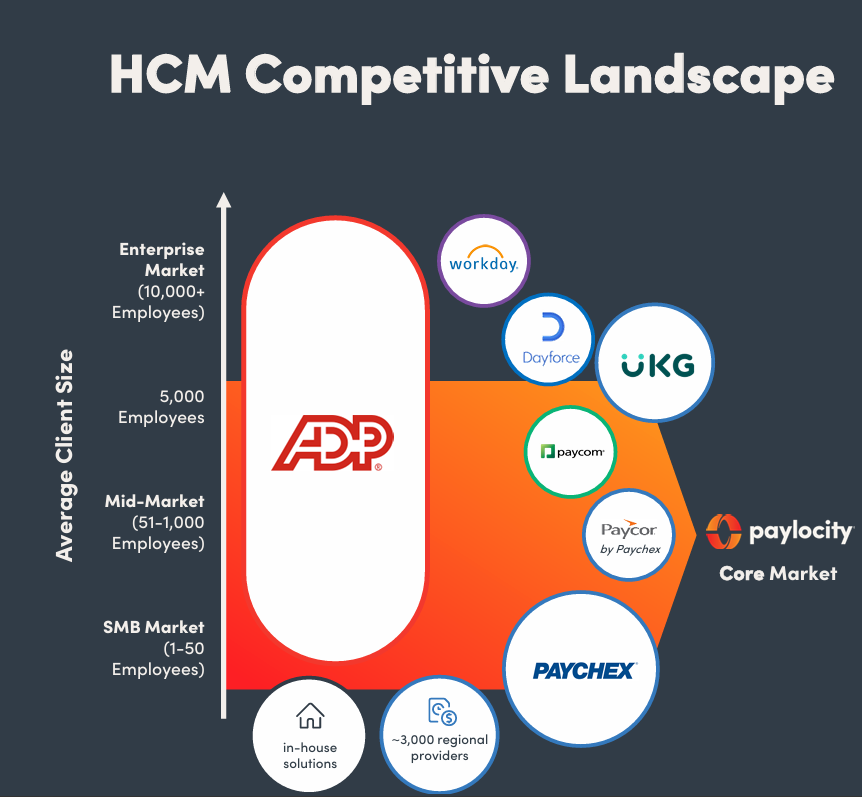
The HCM market is highly fragmented. ADP is the only provider that offers payroll solutions for businesses of all sizes.
Source: Paylocity Investoren Presentation
Most of our competitors are also listed on the U.S. stock exchange.

Source: Market Cap
With a market capitalization of $85 billion, Automatic Data Processing is by far the largest player. It is followed by Paychex and Workday, two companies each with a market value of around $30 billion. The challengers Paycom and Paylocity have a combined market value of around $6 billion.
While ADP offers a very broad range of HCM solutions, its competitors have a much more focused portfolio.
Workday is the largest competitor in the enterprise customer segment. The second competitor, Dayforce, was also publicly traded but has since been acquired by a private equity firm.
UKG is privately owned and, according to its own figures, provides HCM software to over 80,000 customers.
Let’s turn to the mid-market segment—that is, companies with between 50 and 1,000 employees. This is where competition is fiercest. All other payroll companies, including Paycom, Paychex, and Paylocity, are represented here. Paycor was acquired by Paychex last year for $5 billion.
In the SMB (small and medium-sized business) segment, ADP is solidly positioned with its Run software.
However, other HCM players such as Gusto, Rippling, and BambooHR are pushing into the competitive startup market. Gusto received multiple awards last year for its user experience.
Automatic Data Processing currently holds a market share of around 18 percent of the total HCM market. The second-largest provider is Paychex.
It cannot be ruled out that the largest providers will carry out further acquisitions in the coming years.
ADP's Latest Quarterly Results for March 2026
Just about two weeks ago, Automatic Data Processing reported its quarterly results for the quarter ended in March.
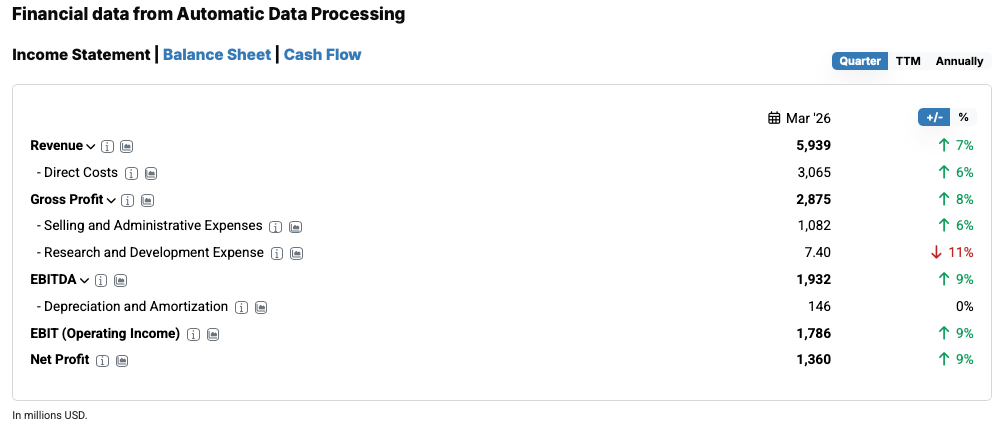
Revenue rose by 7 percent to $5.94 billion. Gross profit increased by 8 percent to $2.86 billion, thanks to lower product costs. Operating profit (EBIT) rose by 9 percent to $1.79 billion.
Source: Financial data
Net income also rose by 9 percent compared to the same quarter last year, reaching $1.36 billion.
ADP’s growth has so far shown no signs of being impacted by potential AI disruption. The operating leverage—where profitability grows faster than revenue—remains evident. Management has reiterated that AI can serve as a business accelerator for the company. Recent sales successes further confirm the success of Automatic Data Processing’s business model.
However, it is not yet possible to make a forecast for the future.
Automatic Data Processing Stock Forecast 2026
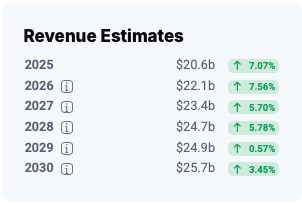
Analysts predict further single-digit revenue growth for Automatic Data Processing in the coming years.
Source: Revenue Estimates
Growth is not expected to slow until 2029.
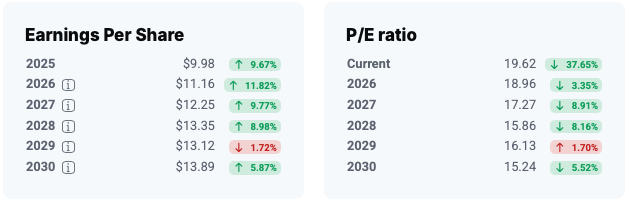
Earnings per share (EPS (TTM), explained simply) are still expected to grow in the high single digits.
Source: EPS
Analysts' forecasts are in line with ADP's past growth. Revenue growth is expected to be between 6 and 8 percent, with EPS growth just shy of double digits.
Assuming the company is not disrupted by AI, these assumptions are realistic.
ADP Stock Dividend Analysis: Key Metrics
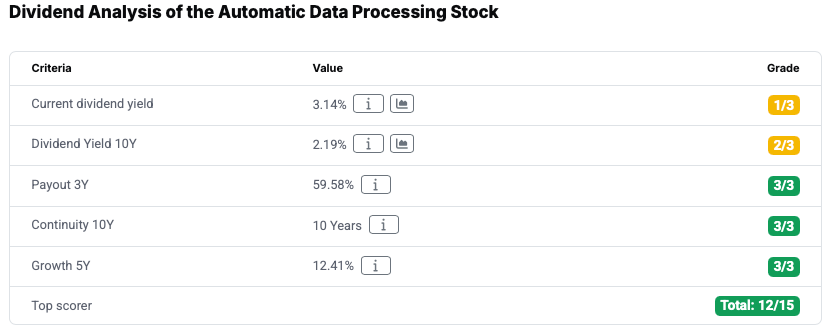
Automatic Data Processing is currently a top performer according to the dividend strategy. It achieved exactly the minimum 12 points required for this. In the last analysis, the stock scored only 11 points. The reason for the increase in the score is the recent decline in the stock price and the resulting rise in the dividend yield.
Source: Dividend Analysis
This currently stands at over 3 percent, which is significantly higher than the average for the past 10 years, which was 2.2 percent. A total of 3 points are awarded for both categories combined.
The payout ratio is below 60 percent, for which the security earns 3 points.
This also applies to the continuity of dividend payments, which stands at 51 years. A dividend score of three points is awarded for just 10 years without a cut.
The annual dividend growth over the past 5 years is a robust 12 percent. The stock also receives 3 points for this.
As shown in the bar chart, the annual increases are impressive.
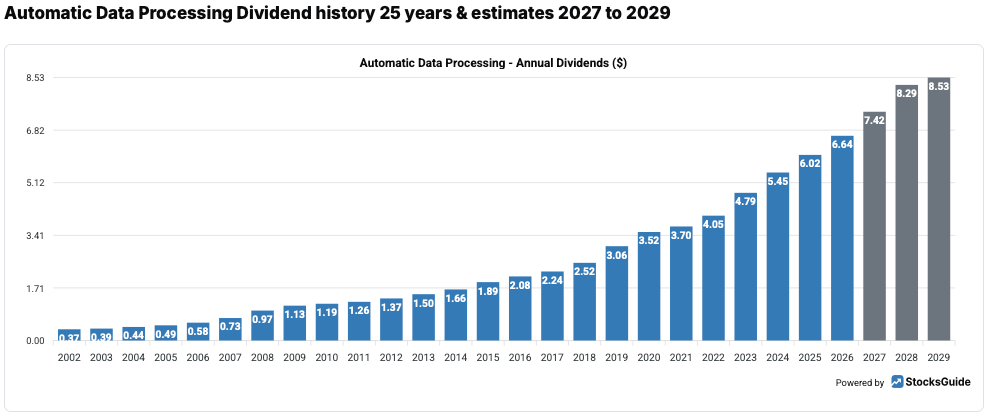
Source: Dividend history
The fact that the dividend was increased even during times of great challenge, such as the 2008–2009 financial crisis, speaks to ADP’s business model and market position.
Dividend increases are also expected in the coming years.
But what is the management’s overall allocation?
Automatic Data Processing Stock Capital Allocation
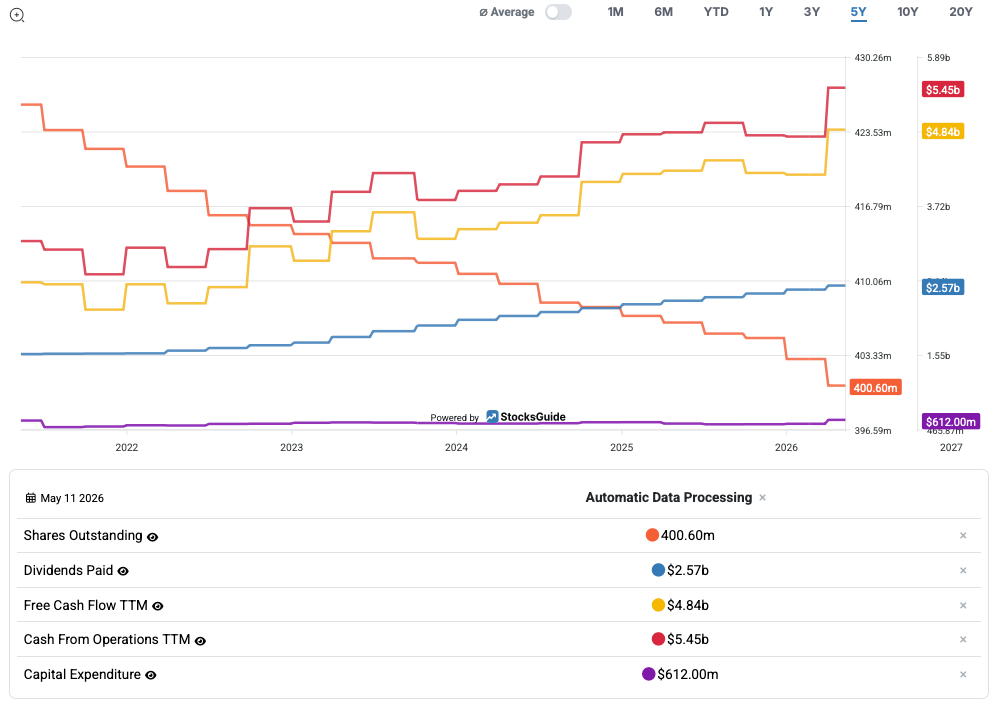
Management pays particular attention to the company’s track record of dividend payments and its status as a “dividend king”—a company that has increased its dividend payouts for over 50 years.
Source: StocksGuide Charts
Over the past five years, however, not only has the dividend been increased annually, but operating cash flow and free cash flow (FCF) have also grown every year.
The dividend payout ratio relative to FCF stands at around 60 percent—a figure that still leaves room for share buybacks or debt repayment.
Since ADP is firmly established as an HCM partner in many companies, the company requires little capital for investments. Currently, these funds are being directed toward expanding the AI infrastructure. However, capital expenditures account for only about 12 percent of operating cash flow. For this reason, ADP conducts ongoing share buyback programs.
The allocation of FCF prioritizes the payment of an annually increasing dividend. The remaining approximately 40 percent is primarily used for share buybacks.
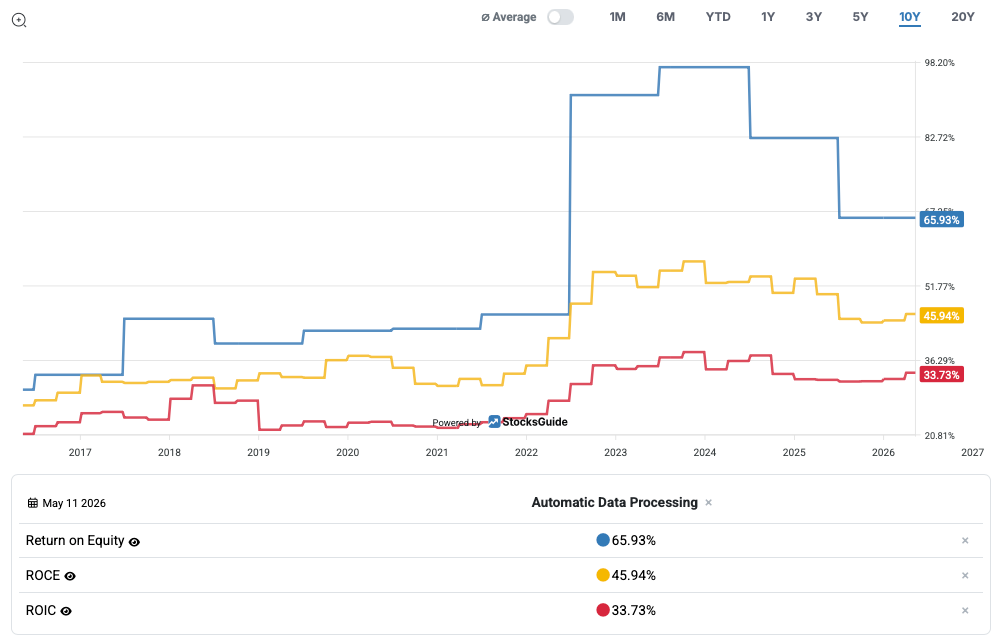
The low capital expenditure requirements are encouraging and result in correspondingly high returns on capital.
Source: StocksGuide Charts
ROCE (Return on Capital Employed) stands at approximately 45 percent, ROIC (Return on Invested Capital) at 32 percent, and return on equity at around 66 percent.
Each of these figures indicates a high return on capital, which serves as a foundation for true compounder stocks.
Furthermore, ADP is significantly ahead of its competitors in this regard, which also speaks in the company’s favor.
Valuation of the ADP Stock
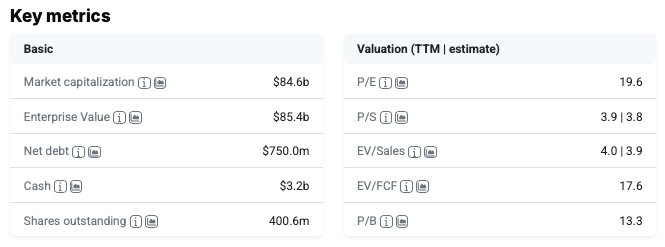
Following a price correction of over 30 percent in the last 12 months, the valuation of Automatic Data Processing stock has reached an attractive level.
All valuation metrics are well below the averages of recent years.
Source: Key metrics
The price-to-earnings ratio (P/E ratio) currently stands at 20 (based on the last 12 months) and at 19 based on expected annual earnings for 2026. In our last analysis three years ago, it was still at 30. The enterprise value-to-sales (EV/Sales) ratio, with a factor of 4, is not expensive for an asset-light business model with high switching costs.
The enterprise value-to-free cash flow (EV/FCF) ratio, at a value of 20, is also no longer high. In the past, the multiple was 30 or higher.
The valuation of the Automatic Data Processing stock is significantly below past levels. This makes the American security attractive at present.
ADP Stock Valuation Comparison
Automatic Data Processing also has no reason to shy away from a comparison with its competitors.

Source: Peergroup
A valuation premium might be justified for its market-leading position. However, we do not see this premium when comparing it to other HCM providers.
Based on the P/E ratio, ADP ranks in the lower mid-range. Workday and Paylocity have higher P/E ratios. Paycom shares have the lowest valuation metrics of all companies. Its EV/Sales ratio is 2.9 and its EV/FCF ratio is 15. However, Paycom does not have a competitive advantage like ADP, as its core business lies in the highly competitive mid-market, which is also served by ADP, Paychex, and Paylocity.
Should you buy Automatic Data Processing stock in 2026?
The overall assessment of Automatic Data Processing is positive.
There were no signs of disruption from AI in potential leading indicators, such as the number of employees billed.
Investors are likely to monitor this KPI particularly closely in the future. Investors should also continuously review the company’s sales performance.
The company stands out for its high switching costs, recurring revenue, and attractive valuation.
The capital allocation is appealing to dividend-focused investors, with a current dividend yield of over 3 percent.
Analysts, however, remain cautious in their ratings.
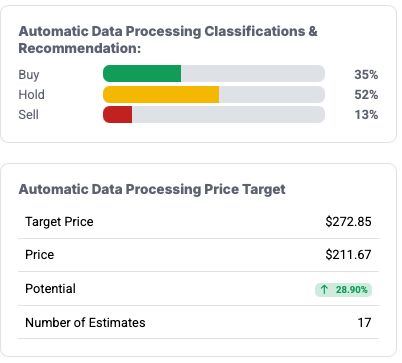
Source: Target price
Half of the experts currently recommend simply holding the stock. Still, 35 percent advise buying, while 13 percent recommend selling.
Nevertheless, the positive factors should outweigh the negative ones.
There are currently no signs of a sell-off driven by heavy insider selling.
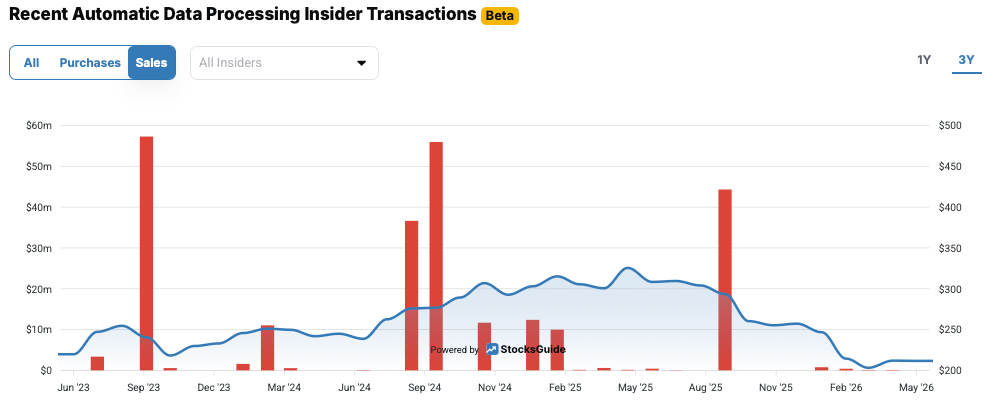
Source: Insider Transactions
Although there have been sales in the past, management—including CEO Maria Black—has been cautious about divestments. The only sale currently on the books is a $2 million transaction scheduled for September 2025. Given that stock-based compensation for fiscal year 2025 totals over $17 million, this sale should not be a cause for concern.
High-quality companies are rarely attractively valued, and when they are, investors have reservations about getting in.
This is how ADP’s current situation could be summarized.
Investors should continue to monitor the company’s situation. For a margin of safety, a P/E ratio alert at 16 or below could represent an even better entry opportunity.
The author and/or persons or companies associated with StocksGuide own or may own shares of ADP. This article represents an expression of opinion and does not constitute investment advice. Please note the legal information.