Verizon Communications (ISIN: US92343V1044) stock have been among the best-known stocks in the US telecommunications sector and on the capital market for years. This is no surprise, as the American telecommunications company stands for a stable and cash-flow-strong business model, a high dividend yield, and a strong market position in the mobile communications sector. In contrast, however, the stock has underperformed the overall market significantly in recent years, resulting in a strikingly favorable valuation. This was mainly due to the threat posed by T-Mobile US, which was taking more and more users away from the established providers in the oligopoly. Since the beginning of 2021, the stock has lost around half of its value at its peak.
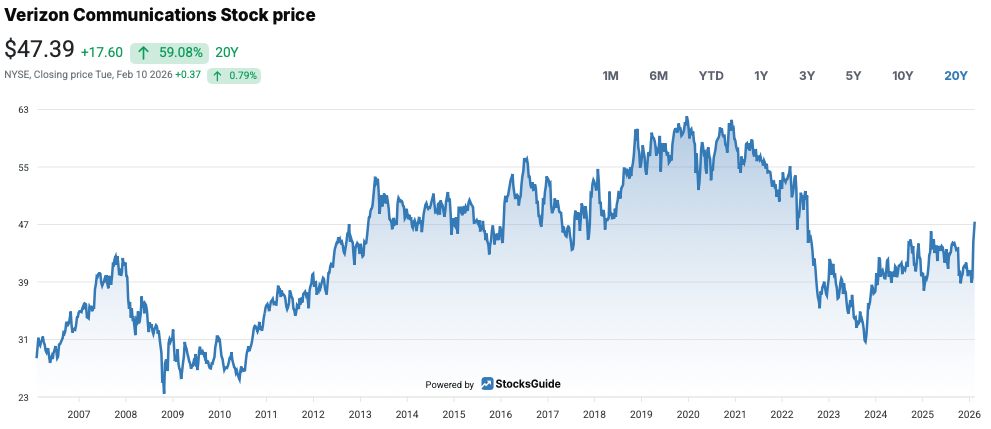
Source: Verizon stock price
However, the latest quarterly figures point to a possible turnaround. Sales and profits themselves were less severely affected. Additional customers were acquired, and the outlook points to continued moderate growth. At the same time, the stock is trading at a single-digit P/E ratio. It is precisely this discrepancy between operational stability, favorable valuation, and weak price performance that makes Verizon stock particularly interesting for value investors. Two strategies are now generating buy signals. These are reasons enough to take a closer look at Verizon shares in an in-depth stock analysis.
Company profile – leading mobile communications provider in the US
Verizon Communications is one of the largest telecommunications companies in the US. Its business focuses on mobile communications services, supplemented by the sale of end devices and offers for private and business customers. Even value investor Warren Buffett held a minority stake in the company from 2014 to 2022. Verizon's dominant position in the US and its appeal to income-oriented investors may have been the deciding factors in this decision. Verizon operates the largest mobile network in the US in terms of area and has around 157 million customers. The company is also positioned in the premium segment of the market.
Source: StocksGuide AI
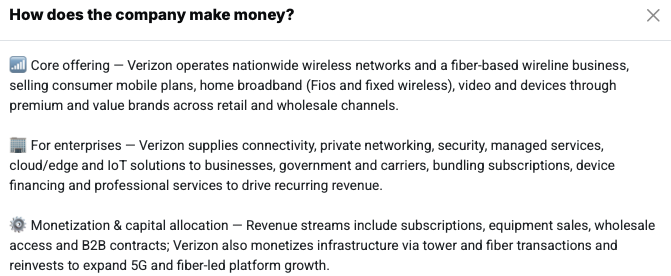
In terms of revenue character, service revenues are the most important revenue block for Verizon, accounting for 82 percent. This includes all recurring revenues from the use of services, primarily monthly fees for mobile phone contracts, data usage, Internet connections, and additional services. In contrast to one-time revenues from the sale of devices, these revenues are generated on a regular basis and thus ensure stable and predictable income. The smaller portion of revenues (18 percent) is attributable to wireless equipment. This refers to the sale of smartphones, tablets, smartwatches, and similar wireless devices that customers purchase directly from Verizon. These revenues often arise in connection with mobile phone contracts, for example when customers buy a new smartphone or finance a device through monthly installments. Looking at the individual segments, Verizon divides its business into consumer and business areas.
Verizon's consumer segment is the largest and is aimed at private customers. It includes mobile phone contracts for individuals and families with fixed terms as well as prepaid offers. In addition, fixed-line Internet and TV services such as Fios (fiber optic) belong to this area. Since private customers regularly replace their smartphones, most end devices are also sold in the consumer segment. The majority of revenue in this segment comes from monthly service fees for mobile communications and internet. In terms of revenue share, the consumer segment is dominant with over 76 percent. With almost $30 billion in 2025, it also generates the largest share of operating income. The business segment, on the other hand, serves business customers, government agencies, and large enterprises. Here, Verizon offers mobile solutions for employees, data plans, cloud and security solutions, and connected applications such as IoT services. Revenue in this segment accounts for around 22 percent of total revenue. This segment accounts for around $2 billion of EBIT. Wireless devices, such as smartphones or special devices for businesses, are also sold in the business segment, but this share is lower than in the consumer business. For business customers, the focus is primarily on reliable networks, customized solutions, and long-term contracts. This leads to stable and predictable revenues.
Opportunities and risks of Verizon
The telecommunications market is known to be highly regulated, capital-intensive, and characterized by intense competition. The construction and operation of mobile networks requires high investments, for example in radio frequencies, transmission masts, and fiber optic networks. At the same time, customers expect very high network quality and reliable connections, which further increases the technical and financial costs.
Source: StocksGuide AI
A special feature of this market is the high importance of the aforementioned network quality and coverage. Providers with a powerful and stable network can charge higher prices and retain customers in the long term. This is a major advantage for Verizon, as it has been investing in the expansion of its network for years and has positioned itself as a premium provider. It is precisely this strong market position that creates a high barrier to entry for new competitors and acts as a moat.
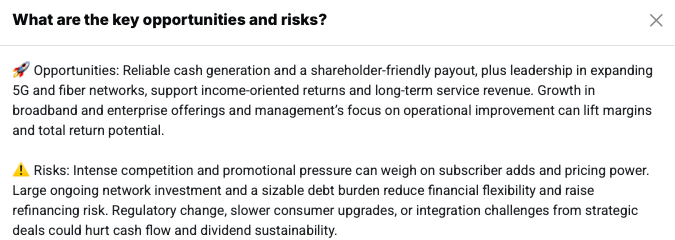
One of the main opportunities is the further expansion of 5G. Higher speeds and lower latencies are opening up new applications, for example in the area of connected devices, autonomous systems, and industrial applications. In the business customer segment in particular, Verizon may be able to benefit from the growing demand for IoT solutions, private 5G networks, and secure corporate connections. Increasing consumer data consumption also offers long-term growth potential for service revenues.
At the same time, however, there are also risks associated with the high investments and debt involved in network expansion. Large expenditures for spectrum auctions and infrastructure can limit financial flexibility, especially if technological developments change faster than expected. Regulatory intervention or changes in data protection and competition rules can also influence the business model.
Verizon's competitors
Another risk lies in the intense price pressure on the mobile communications market. Competitors are trying to win customers with cheaper tariffs, which can put pressure on margins. In addition, the market in the US is already largely saturated, so growth must come less from new customers and more from higher revenues per customer. This increases the pressure to constantly develop new services and value-added offerings.
Source: StocksGuide AI
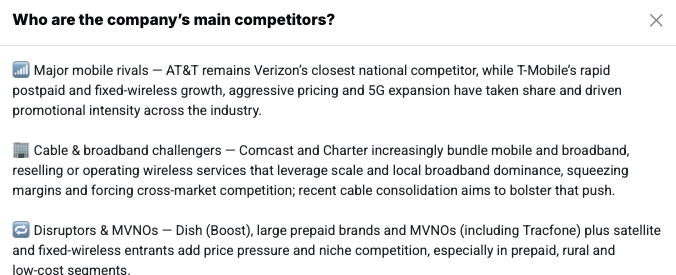
Verizon's main competitor is clearly AT&T. The telecommunications giant has a similarly broad portfolio and offers both mobile and landline services for residential and business customers. Like Verizon, AT&T has a nationwide mobile network in the US and competes directly for the same customer groups. Competition between the two companies is primarily based on network quality, pricing, and service offerings. AT&T positions itself somewhat more broadly, while Verizon focuses more on network quality and reliability. Another key competitor is T-Mobile US. T-Mobile has gained significantly in importance in recent years, especially after its merger with Sprint. It pursues a more aggressive pricing policy and appeals to young, price-conscious customers. This growth is at the expense of the two large established competitors. For years, T-Mobile US has been growing faster than the overall market, forcing established providers such as Verizon to regularly adjust their rates and offerings. With a market capitalization of over $220 billion, T-Mobile US is now the most valuable telecommunications company in the US. But it is also the most highly capitalized mobile communications company in the world. However, the success story has stalled since the beginning of 2025.
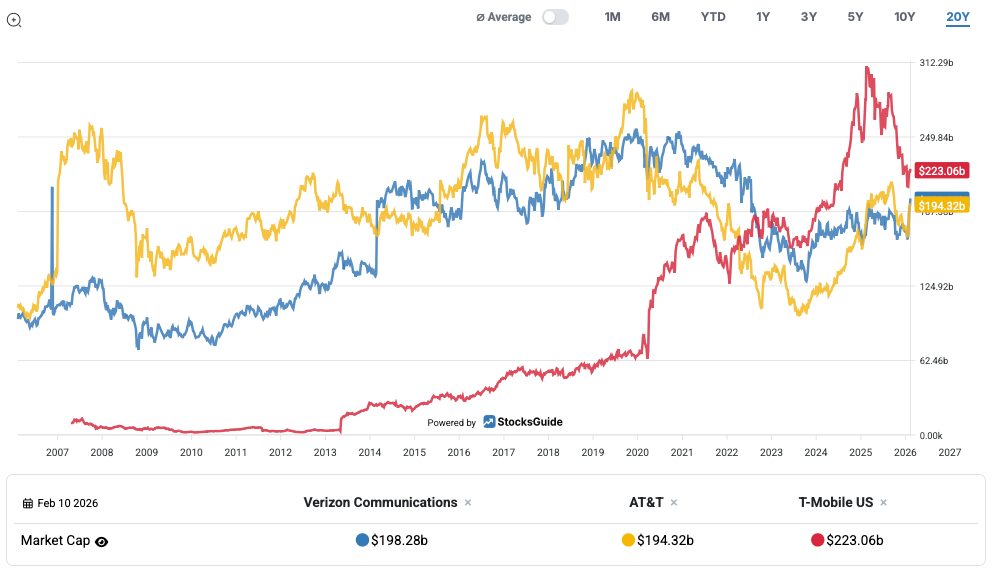
Source: Market Cap
Looking at revenue and earnings, it is clear that T-Mobile US significantly outperforms its peers. It is setting a much better pace in terms of both revenue and earnings. AT&T in particular is suffering the most in terms of revenue.
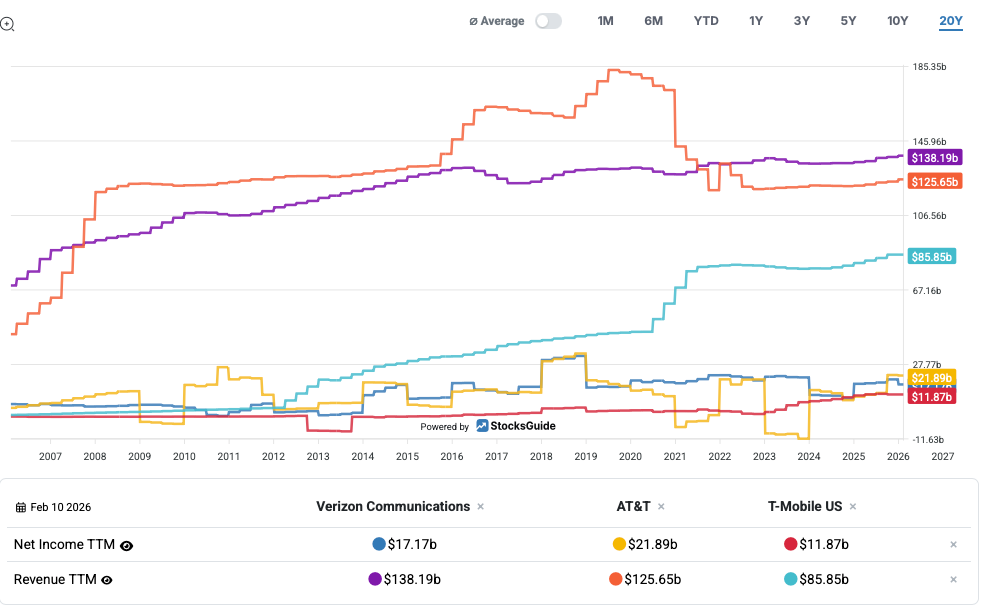
Source: Net Income & Revenue
In addition to these three major providers, there are smaller competitors and so-called mobile virtual network operators (MVNOs). These companies do not have their own networks, but lease capacity from large network operators such as Verizon or AT&T. They compete primarily with low prices and simple tariff models. They do not pose a direct threat to Verizon, but they do increase price pressure on the market as a whole. However, Starlink's new satellite internet could pose a threat. With his company, Elon Musk has created a genuine, market-ready alternative for mobile internet. However, this service is likely to spread mainly in rural areas where it would be too expensive for its competitors to ensure high network coverage. Nevertheless, these developments should be kept in mind.
Verizon's latest quarterly figures from December 2025
The results for the fourth quarter of 2025 show a clear turning point for Verizon. The company recorded its highest combined net additions in mobile and broadband since 2019. This could be the beginning of a strategic turnaround. Overall, Verizon gained over one million new customers in the final quarter, including 616,000 new postpaid mobile customers – the best fourth quarter since 2019.
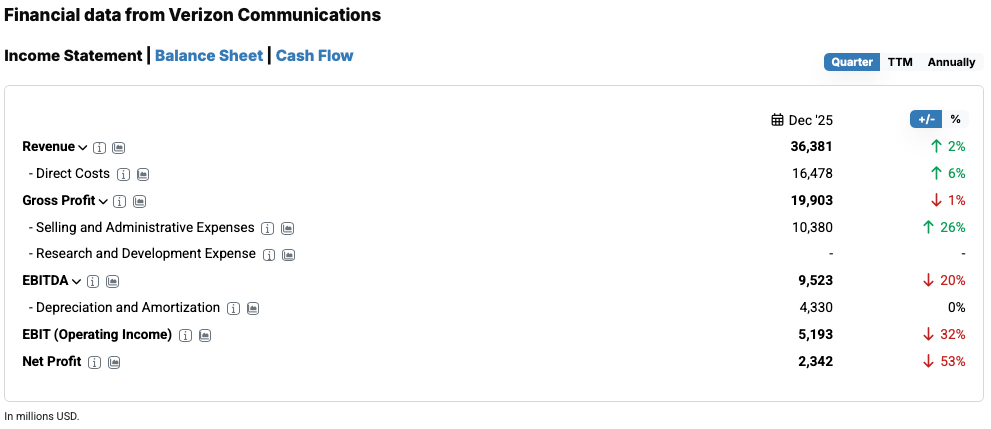
Source: Financial data
Financially, the quarter looked solid. Revenue amounted to US$36.4 billion, with earnings per share of US$0.55. Adjusted for special items, earnings per share amounted to US$1.09. Reflecting this, net income amounted to US$2.3 billion, down from just over US$5 billion previously. This was primarily due to restructuring, legal provisions, and write-downs on assets in the Verizon Business segment. Nevertheless, EBITDA reached nearly $10 billion. These figures underscore the company's stable operating performance, even though the market environment remains challenging.
The mobile communications business showed a clear improvement. Revenues from wireless services rose 1.1 percent year-on-year to US$21 billion. Revenues from wireless equipment performed particularly well, rising 9.1 percent to US$8.2 billion. Verizon also made significant progress in the broadband business. In the fourth quarter, 372,000 new broadband customers were added. Of these, 319,000 were fixed wireless access customers, bringing the total number of customers in this segment to over 5.7 million. In addition, the company gained 67,000 new Fios Internet customers. This was the strongest fourth quarter in this segment since 2020.
A particularly important strategic move was the acquisition of Frontier for approximately $20 billion. Verizon now has a significantly larger fiber optic network, reaching more than 30 million households and businesses. Following the acquisition, the company has a total of over 16.3 million connections in the areas of fixed wireless access and fiber optics. This expansion strengthens the combination of mobile and broadband offerings and supports the long-term growth strategy.
Verizon forecast for 2026
Verizon's outlook for 2026 underscores that management sees the company at a strategic turning point. The forecast for 2026 is intended to reflect the beginning of the turnaround and represents a significant improvement over the average of the last five years. Verizon expects strong growth in mobile customers in 2026. The number of new postpaid mobile customers is expected to be between 750,000 and one million, which is about two to three times higher than in 2025. Growth is expected to be achieved less through aggressive price cuts and more through sustained volume growth and higher customer loyalty. The company expects solid growth in revenue in its core business. Service revenues from mobile communications and broadband are expected to increase by two to three percent, reaching a total of around US$93 billion. Wireless service revenues, on the other hand, are expected to remain stable in 2026. Verizon also forecasts a noticeable improvement in profitability. Adjusted earnings per share are expected to be between $4.90 and $4.95. This represents growth of four to five percent over the previous year – a significant acceleration compared to the recent past and a sign of improved operational efficiency. Operating cash flow is expected to reach up to $38 billion in 2026. At the same time, the company plans to invest between $16 billion and $16.5 billion, with a significant portion going toward further expansion of the fiber optic network. In 2026 alone, at least two million additional households and businesses are expected to be supplied with fiber optics. The company expects free cash flow to increase to at least US$21.5 billion. This would represent growth of around seven percent compared to 2025 and would be the highest free cash flow since 2020.
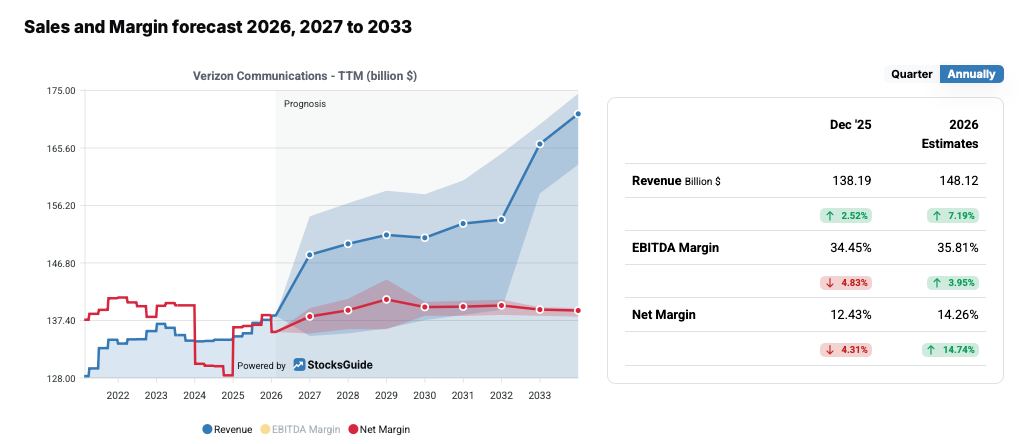
Source: Sales and Margin forecast
The figures for the fourth quarter of 2025 were received extremely positively by the market. The share price rose by more than 11 percent when the quarterly figures were published on January 30, 2026. Analysts also view future developments very positively. Consistent low single-digit revenue growth could be achieved in the coming years. Net profits could rise at a similarly strong rate, leading to a stable net margin being forecast.
Key figures for Verizon from the dividend analysis
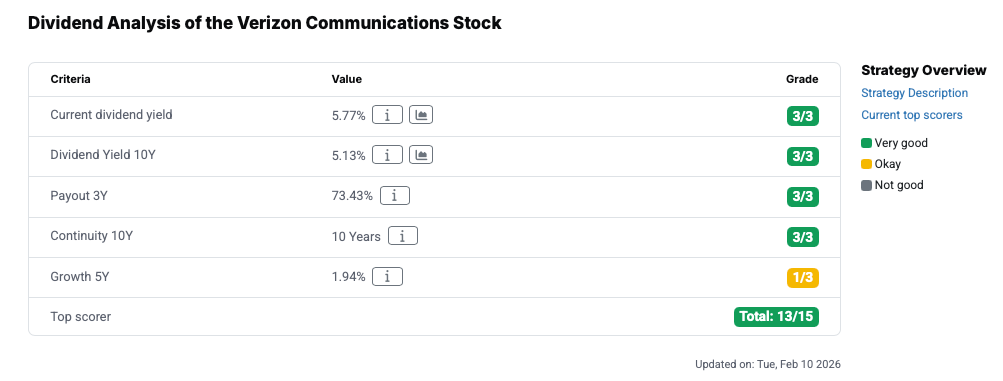
Verizon shares are characterized by a high and stable dividend. With a current dividend yield of around 5.9 percent, the company is one of the most attractive dividend payers in the telecommunications sector. Even over a period of ten years, the average dividend yield remains high at a good 5.2 percent, which indicates a reliable long-term distribution policy. Over the last 20 years, the dividend yield has essentially fluctuated between 4 and 7 percent.
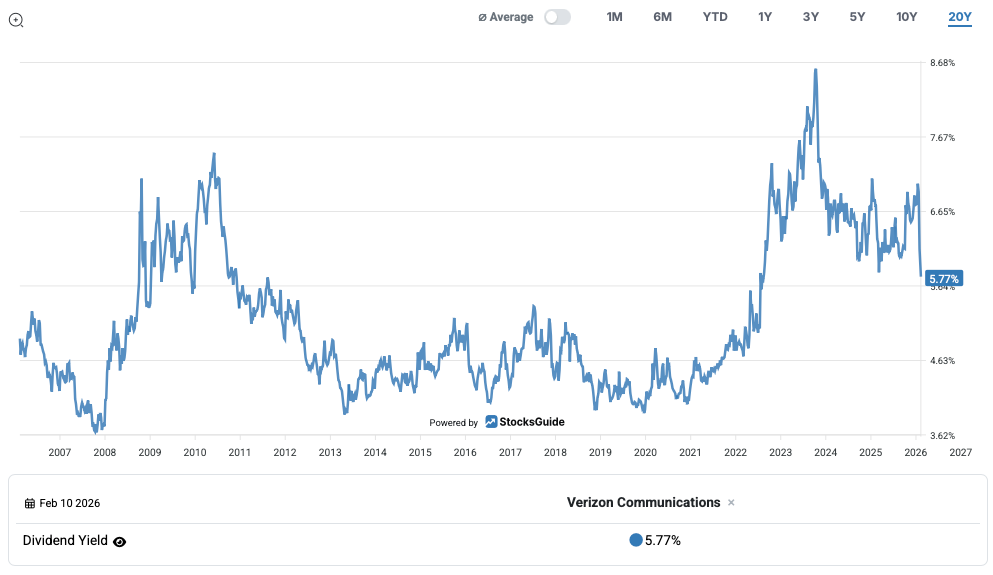
Source: Dividend Yield
The payout ratio for the past three years is around 66 percent, which is a sustainable level. This figure is considered balanced. It shows that Verizon is passing on a large portion of its profits to shareholders without jeopardizing its financial stability or necessary investments in the business.
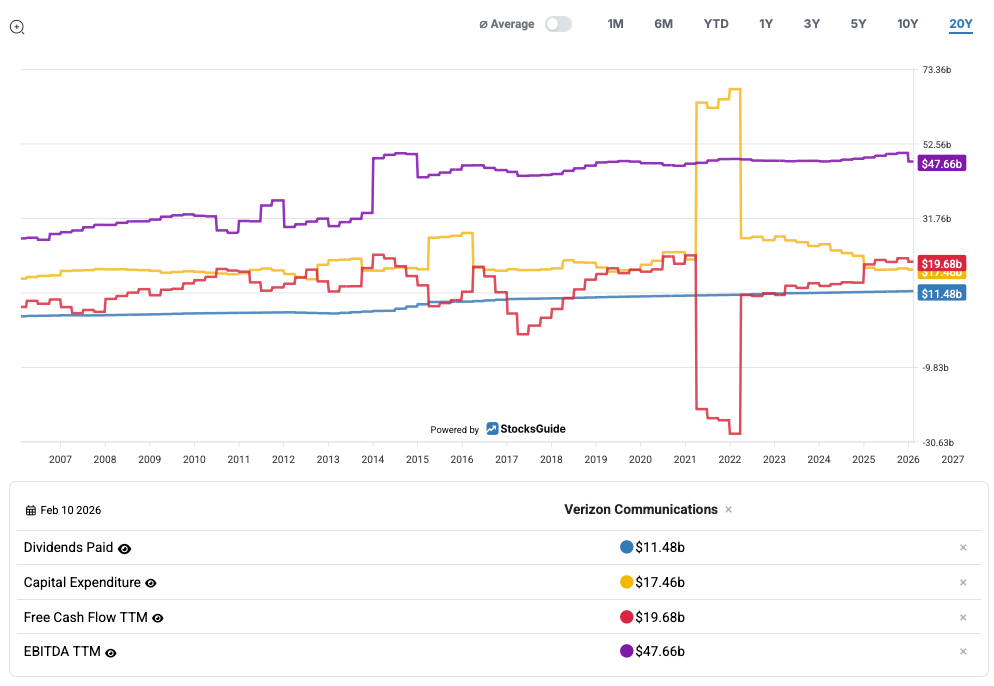
Source: StocksGuide Charts
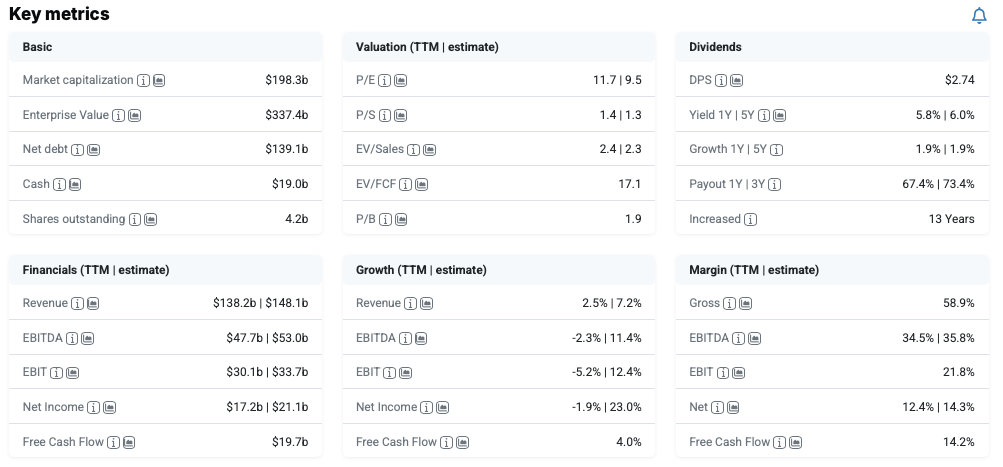
A look at the development of key earnings figures shows that the dividend paid out, amounting to US$11.4 billion, is still below the total potential. The dividend therefore appears to be well secured by current earnings and cash flows.
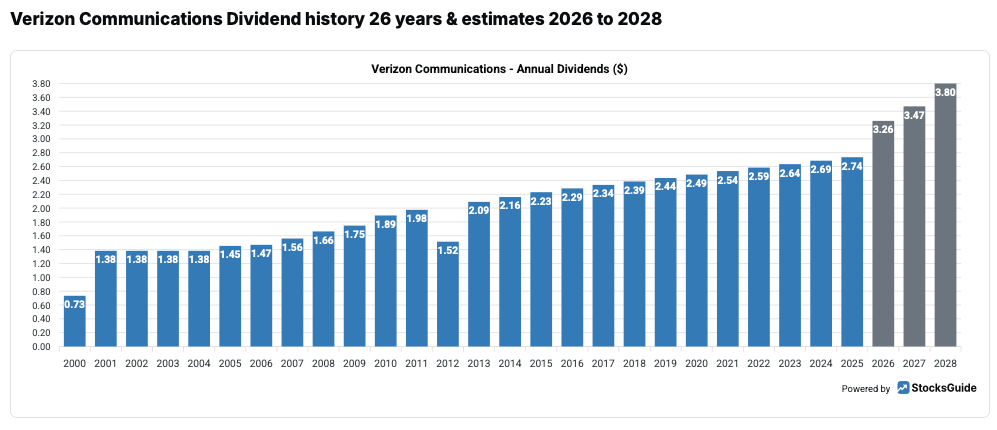
Source: Dividend history
Another important point is the continuity of dividend payments. Verizon has paid dividends without interruption for more than ten years and has even increased them regularly. Dividend growth, on the other hand, has been weaker. Over the past five years, average dividend growth has been just under 2 percent per year. Verizon is increasing its dividend, but only in small increments. This means that only part of the increase is a genuine inflation adjustment.
Source: Dividend analysis
Nevertheless, Verizon scores a total of 13 out of a possible 15 points in the dividend analysis, making it one of the top performers. The stock is therefore particularly suitable for investors who value high current income, stability, and reliability—even if dividend growth is rather moderate.
Valuation of Verizon
With an expected P/E ratio of 9.2 and forecast revenue growth of 7.2 percent, Verizon shares could offer attractive value for money. The cash flow multiple (EV/FCF) of 16.9 also signals an affordable valuation. Net debt of almost USD 140 billion appears acceptable given stable EBITDA of over USD 50 billion. Returns on capital employed are also attractive, with a return on equity of 16.4 percent and a ROCE of 8.8 percent.
Source: Key metrics
There are several reasons for the comparatively low valuation of Verizon shares. These are not so much related to a single problem, but rather to a combination of structural, financial, and market-related factors. One key reason is the low growth potential that the market has attributed to the company for many years. The US mobile communications market is considered to be largely saturated, as almost every potential customer already has a mobile phone contract. Growth is therefore limited to new customers and mainly comes from higher revenues per customer. Investors generally value such markets with lower valuation multiples, as dynamic revenue and profit growth is lacking or slow. Added to this is strong competitive pressure, particularly from T-Mobile US, which has grown aggressively in recent years and gained market share. T-Mobile is putting pressure on the market with attractive prices and rapid expansion in the 5G sector, which has led to customer pressure and, in some cases, stagnating service revenues for Verizon. However, high debt is also an important factor. In recent years, Verizon has had to invest enormous sums in network expansion and frequency auctions. In addition, there have been acquisitions such as Frontier. Although cash flow is stable, the absolute level of net debt of almost $140 billion is daunting to many investors. It limits financial flexibility, increases sensitivity to rising interest rates, and weighs on the valuation – even if the debt is fundamentally sustainable. Fundamentally, the high capital intensity of the business model poses a problem. Verizon must continuously make high investments to keep its network technically up to date. The big money is made by the companies that use the infrastructure, namely all the major tech companies.
Conclusion on Verizon
Verizon is an established telecommunications company with strong cash flow, clear market leadership in the US, and a stable base of mobile and broadband customers. The stock offers an attractive dividend yield, consistent distributions, and solid financial metrics. At the same time, the valuation appears comparatively favorable. Low growth, strong competition, and high debt are deterrents.
However, the latest quarterly figures and the outlook for 2026 show that the company has reached a strategic turning point. With rising customer numbers, growing service revenues, the expansion of the fiber optic network, and higher free cash flow, Verizon could successfully turn itself around. The stock therefore offers income-oriented investors an attractive dividend and further upside potential.
Source: Target price
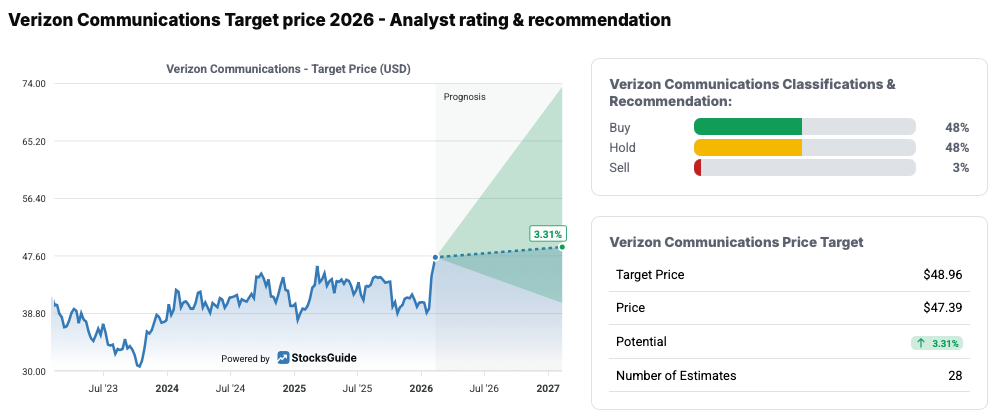
Analysts have mixed feelings about the stock. Forty-eight percent recommend buying, while another 48 percent recommend holding. Only 3 percent recommend selling. The average price target of $47.94 after one year is around 3.5 percent above the current price. The upside potential is therefore limited. Together with the dividend, this could mean a total return of around 10 percent. However, the technical breakout when the quarterly figures were published is interesting. It shows that the market did not expect such a good outlook. Those who still want to keep an eye on the stock can set an alert. A price of $40 would correspond to the average of the last three years and would therefore be an interesting marker for the alert. Converted, that would be less than €34.
The author and/or persons or companies associated with StocksGuide own or may own shares of Verizon. This article represents an expression of opinion and does not constitute investment advice. Please note the legal information.